
Recently, while browsing catalogues of books online I happened upon a volume entitled William Penn, Thomas Gray and an Account of the Historical Associations of Stoke Poges, which was compiled by F. McDermott and privately published in around 1930 on behalf of the Penn-Gray Society. The book itself provides short histories of the lives of William Penn (writer, and founder of the Province of Pennsylvania) and poet and scholar Thomas Gray (including a reproduction of Gray’s famous Elegy), alongside information on the historical associations of the village of Stoke Poges in Buckinghamshire, with which both Penn and Gray are strongly associated. The most interesting aspect of this particular copy for me however was a “With compliments of The Penn-Gray Society” page at the front of the book, which was addressed to the original recipient and contained the signature of the society’s president, one M. R. James.
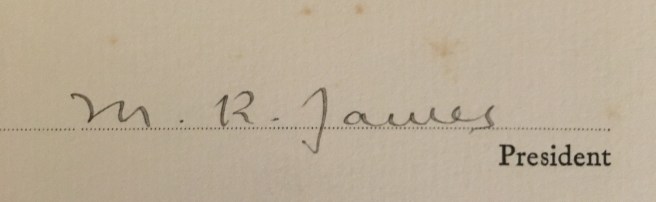
Immediately intrigued, I became hopeful that I would finally be able to add a book containing James’ own signature to my collection. However, I had never heard of, nor read any reference to Montague Rhodes James in relation to the Penn-Gray Society, and had my doubts as to whether this was the M. R. James, or simply a matter of coincidence. Nevertheless, the signature itself certainly seemed to be in James’ hand, and while there does appear to have been a fair bit of variation in examples I’ve seen, it definitely looked to be a close enough match to warrant further research. It was time to begin some Mr. Somerton-style investigation.
The village of Stoke Poges lies around four miles north of Eton College. This fact, combined with the book’s date of publication occurring in the midst of James’ provostship at Eton, served to raise my hopes that a link could be proven. Thomas Gray himself attended Eton during the 18th Century, and there remains a strong association between Gray and the institution.
The only clues I was able to unearth of any connection to William Penn, Thomas Gray or Stoke Poges within James’ own published works, outside of a cursory mention of the village on page 34 of Eton and King’s [1], were to be found buried within letters sent to Gwendolen McBryde and thankfully preserved in Letters to a Friend [2]. With the help of the index to the book on the Ghosts and Scholars website [3], references to Thomas Gray were discovered on pages 136, 214 and 218; while Stoke Poges is mentioned on pages 205 and 213. The most crucial of these references would be found in a letter dated 27th September 1934 (p. 205), which reads as follows:
“I […] have inspected the laying out of a proposed sort of garden cemetery at Stoke Poges. I think it promises well and will not spoil the old churchyard, of which I was afraid.”
References online to the Penn-Gray Society appeared scarce, but I was able to find an archived letter to The Spectator, dated 16th July 1932, sent by a Mrs. D. Dyott Drayson, Secretary to the Appeal Committee of the Penn-Gray Society, “to make an appeal on behalf of the […] Society, whose object is to save by purchase the land surrounding the ancient Churchyard of Stoke Poges.” [4]
So far, so good.
At this point I decided it would be wise to contact Rosemary Pardoe and defer to her expertise to establish whether a connection between James and the Penn-Gray Society was already referenced in some book or paper unknown to me. However, Rosemary had similarly never encountered anything of this nature, although did concur that the signature in the book appeared to be James’.
Undeterred, I then happened upon the website of the Stoke Poges Society [5] – dedicated to the study and preservation of historical information and artefacts relating to the village – and composed an email detailing my queries relating to the Penn-Gray Society and a potential connection to M. R. James. Several days later I received a response from the society’s chairman confirming my suspicions and providing some useful additional information about the society, along with several incredibly interesting photographs of James’ entry in the membership book, the dedication ceremony that took place following the purchase of the land, and also a copy of the order of service for James’ funeral, which is in the ownership of Buckinghamshire Council. Alongside these were some additional letters and documents relating to the society. All of these can be found at the end of this article.
I then turned to the online archive of The Times (to which James was fond of writing himself, particularly in his later years), to see if any additional information could be uncovered within. This search revealed a number of letters and reports published between 1930 and 1935 concerning the formation of the society and their goal of preserving the land surrounding the churchyard, along with a visit from the queen consort to the Penn-Gray Museum in 1931 [6], and an argument facilitated through several letters to the editor around the proposed use of the land, instigated by a Mrs. Florence Hardy (the widow of novelist and poet Thomas Hardy) in 1934, who wrote of her (mis)understanding of the proposals that “For a vulgarization of poetic sentiment I think this plan is unequalled. […] I expected many pens to leap into the inkpot in protest, but mine seems the only one.” [7]
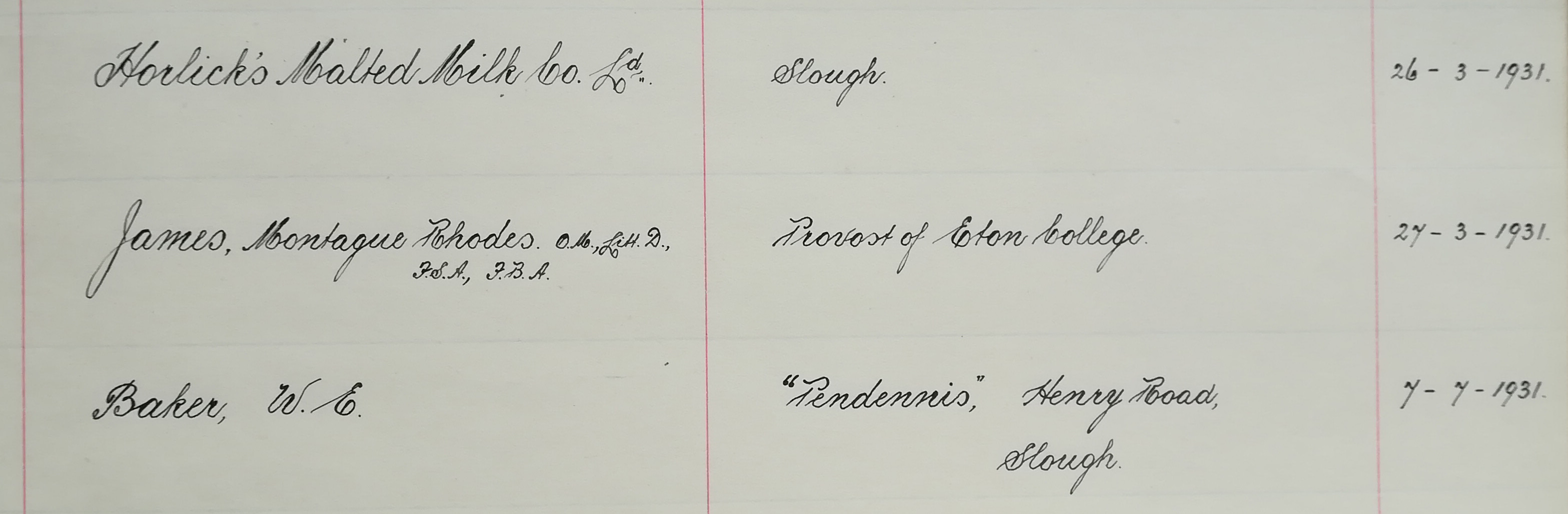
From this research, I have established that the story of the Penn-Gray Society began with its founding in 1930, at which time notices were published stating the aim of raising the sum of £30,000 in order to purchase the land surrounding the ancient churchyard of Stoke Poges for the purpose of preservation and the prevention of the area becoming a site for housing. The membership book reveals that M. R. James became a member (and presumably assumed the role of president) on the 27th March 1931, his name appearing directly below an entry for the Horlicks Malted Milk Co. Ltd., of Slough. That said, a newspaper clipping from The Times dated 28th July 1930 does refer to James as president of the society, and so there is some confusion around the exact dates [8].
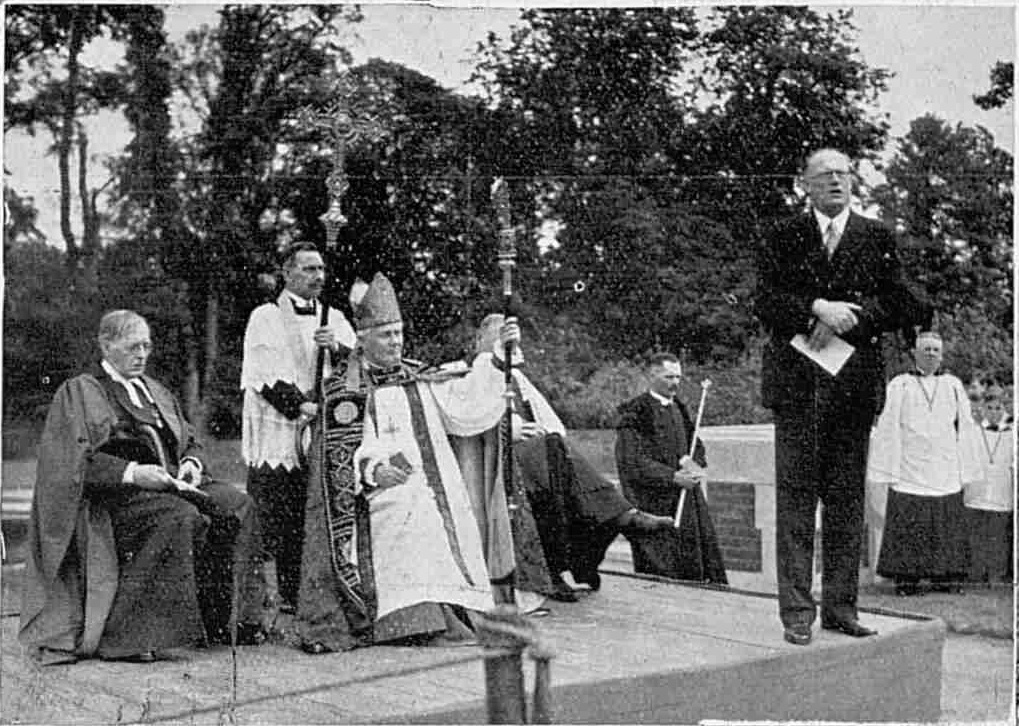
The fundraising continued over a period of eighteen months, but fell far short of the total needed to purchase all of the land desired. Shortly before being lost to developers, a limited company was formed with the assistance (and financial backing) of an adjacent landowner and assumed financial responsibility for the society, securing the entire site. Following the purchase, it was decided in 1934 that the land would become a memorial garden [9], which was formally opened with a dedication ceremony by the Bishop of Buckingham, with James in attendance, on the 25th May 1935 [10][11][12]. The Stoke Poges Memorial Gardens remain to this day, and are now owned and administered by Buckinghamshire Council.
The final mention of Stoke Poges contained within the pages of Letters to a Friend occurs in a letter to Gwendolen dated 2nd July 1935 (p. 213). James writes:
“Also an enquiry whether I will go over to Stoke Poges on the 30th and hear the Elegy performed and say a few appropriate words. I know not.”
Whether he returned to the memorial gardens for this or any other purpose before his death the following year is not mentioned.
I hope this small nugget of information on an admittedly minor aspect of M. R. James’ life has been of interest. I believe that this may be the first time the connection between James and the Penn-Gray Society has been written about in any detail, at least within the study of James himself. However, if you have any additional information on or insight into this, please do get in touch.
It should be of no surprise that the book that began this particular piece of research was purchased, and in fact confirmed the James connection itself with a list of senior society members contained toward the end. If you’d like to see some photographs, I’ve now added it to the book collection section here.
Below you will find all of the most relevant resources I discovered while researching this matter, mainly those that specifically mention James in relation to the Penn-Gray Society. Click on any image for the full-size version.
My thanks to Rosemary Pardoe and the chairman of the Stoke Poges Society, Harvey Whittam, for their assistance with my investigation.
Duncan J. Rule.
Footnotes
[1] James, M. R. Eton & King’s, Williams & Norgate, 1926.
[2] James, M. R. Letters to a Friend, edited by Gwendolen McBryde, Edward Arnold, 1956.
[3] Pardoe, D. & Pardoe, R. “Index to Letters to a Friend“. Ghosts & Scholars, 5th Dec. 2005, http://www.pardoes.info/roanddarroll/LetterstoaFriend.html
[4] “The Penn-Gray Society.” The Spectator, 16th July 1932, p.19.
[5] The Stoke Poges Society, 2021, https://e-voice.org.uk/stoke-poges-society/
[6] “The Queen at Stoke Poges.” The Times, 8th May 1931, p. 14.
[7] “A Burial Garden at Stoke Poges.” The Times, 4th April 1934, p. 14.
[8] “Stoke Poges – £30,000 Required to Avert Spoliation.” The Times, 28th Jul. 1930, p. 10.
[9] “Landscape of Gray’s “Elegy” – Part to be Preserved as a Garden.” The Times, 13th March 1934, p. 17.
[10] “The Memorial Gardens at Stoke Poges.” The Sphere, 1st June 1935, p. 416.
[11] “Safeguarding Stoke Poges – Gardens to be Opened Next Week.” The Times, 15th May 1935, p. 11.
[12] “Memorial Gardens at Stoke Poges – Preservation of Historic Meadow.” The Times, 27th May 1935, p. 8.

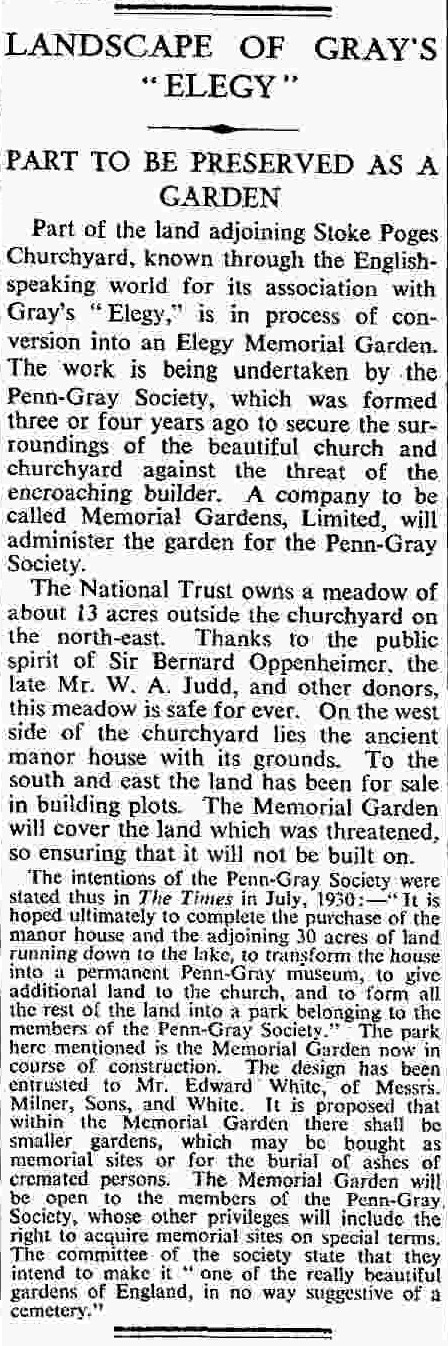
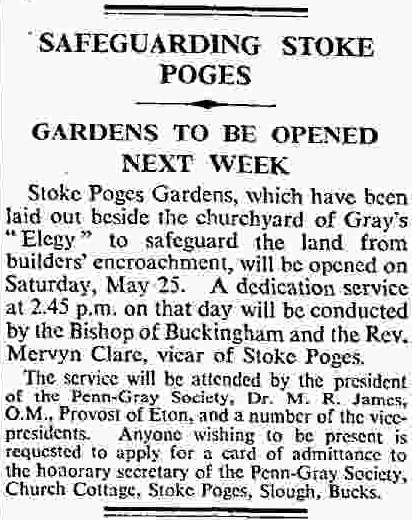
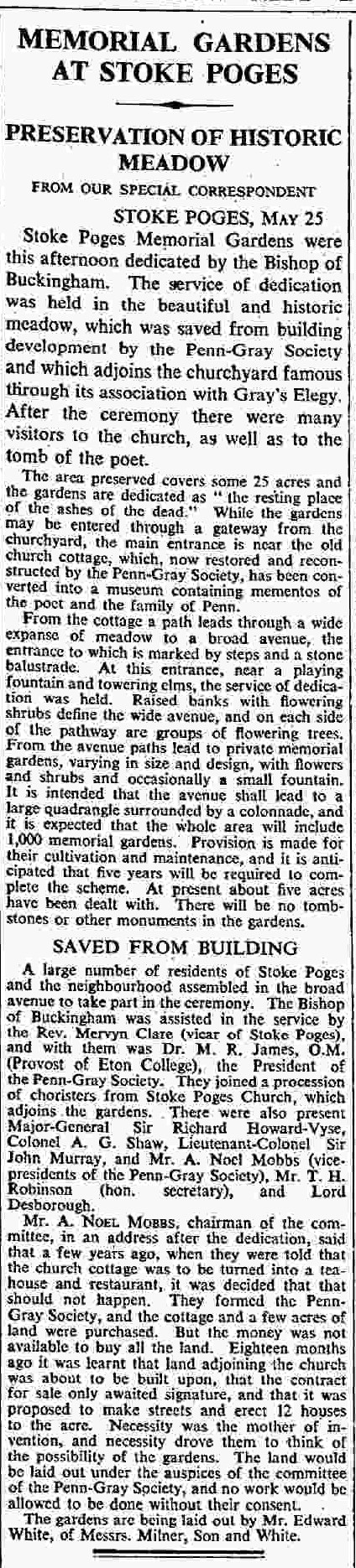
A selection of articles published in The Times between 1930 and 1935 detailing the formation of the Penn-Gray Society, plans for the purchased land, and the opening and dedication ceremony in May 1935. James is mentioned several times throughout.
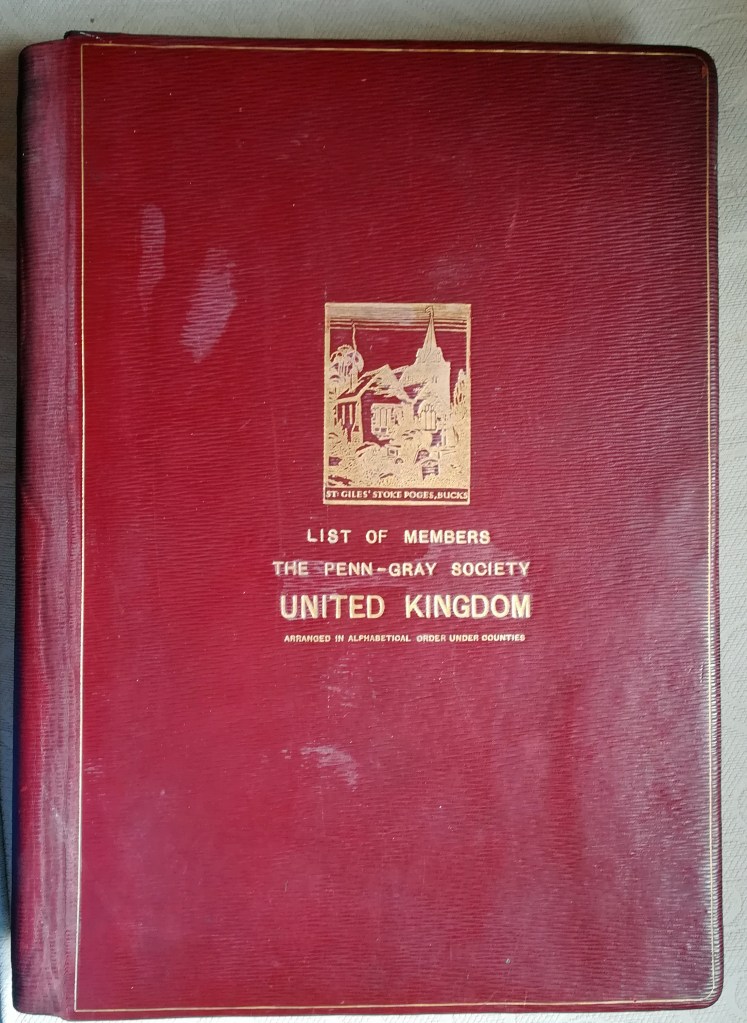
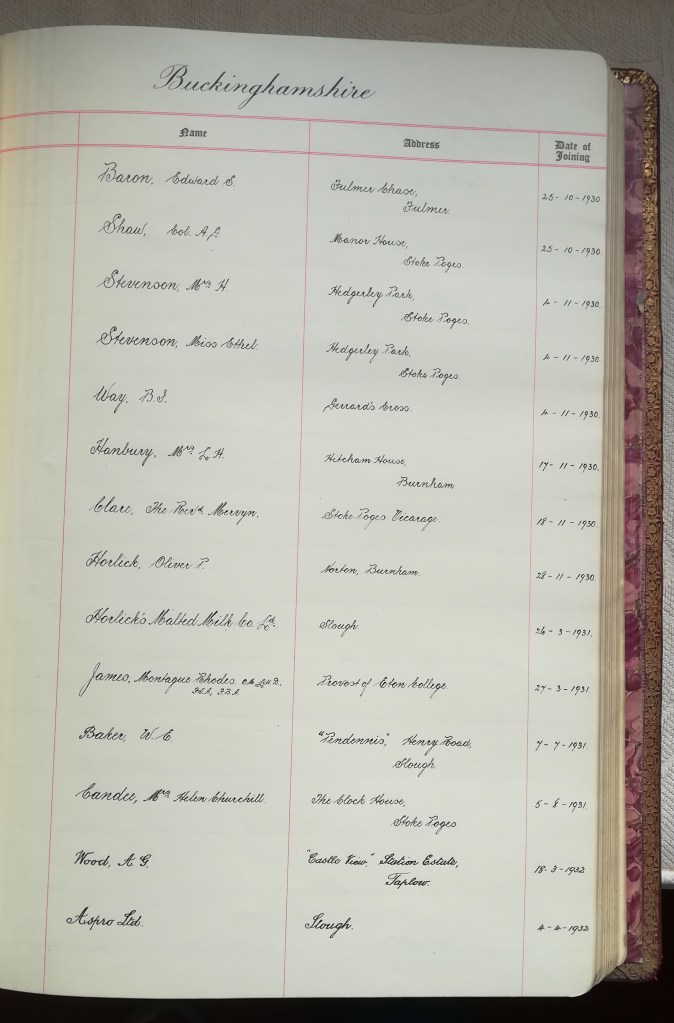
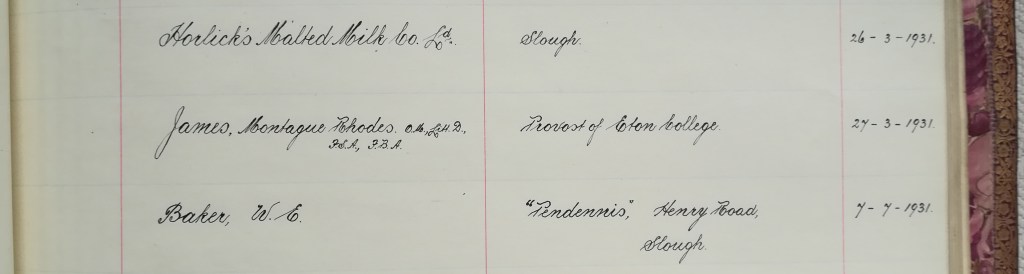
Some photographs of the Penn-Gray Society membership book, and James’ entry therein. Reproduced with kind permission of the Stoke Poges Society.
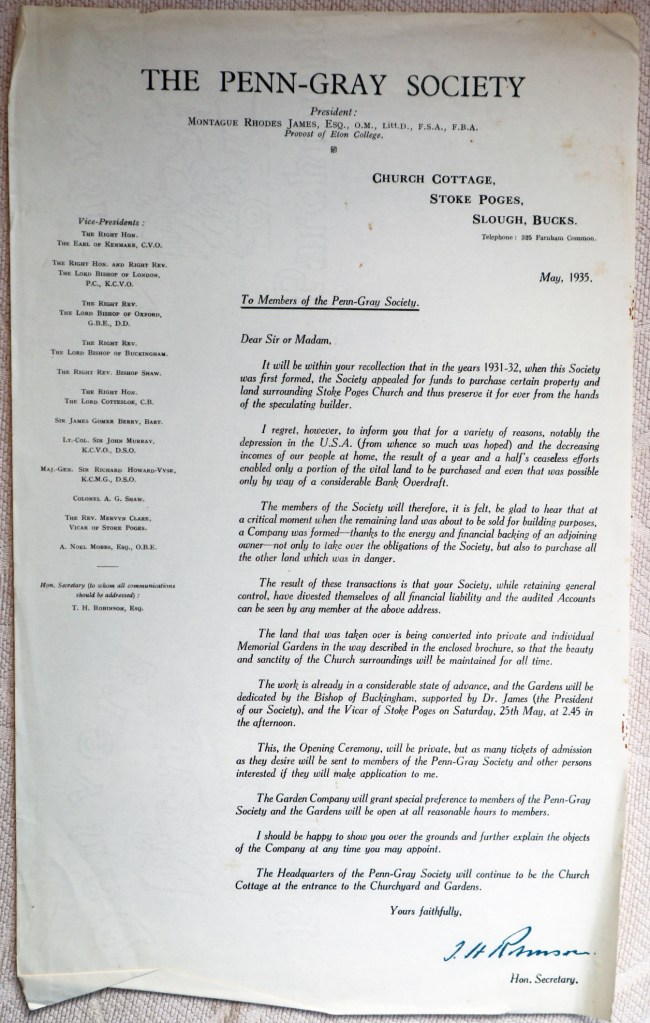
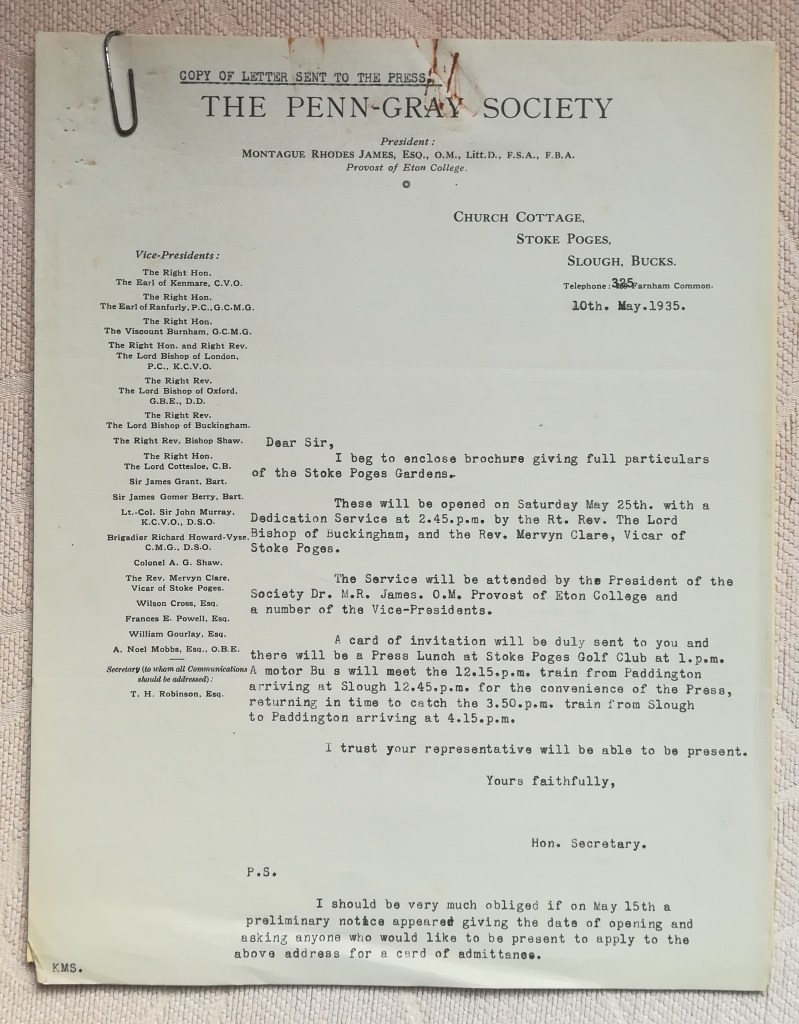
Two letters from the secretary of the Penn-Gray Society, T. H. Robinson, dated May 1935 and sent to the members of the society and the press respectively, announcing the opening of the memorial gardens and dedication ceremony. James in mentioned in each. Reproduced with kind permission of the Stoke Poges Society.

Order of service for the Stoke Poges Memorial Gardens dedication ceremony with James named. Reproduced with kind permission of the Stoke Poges Society.
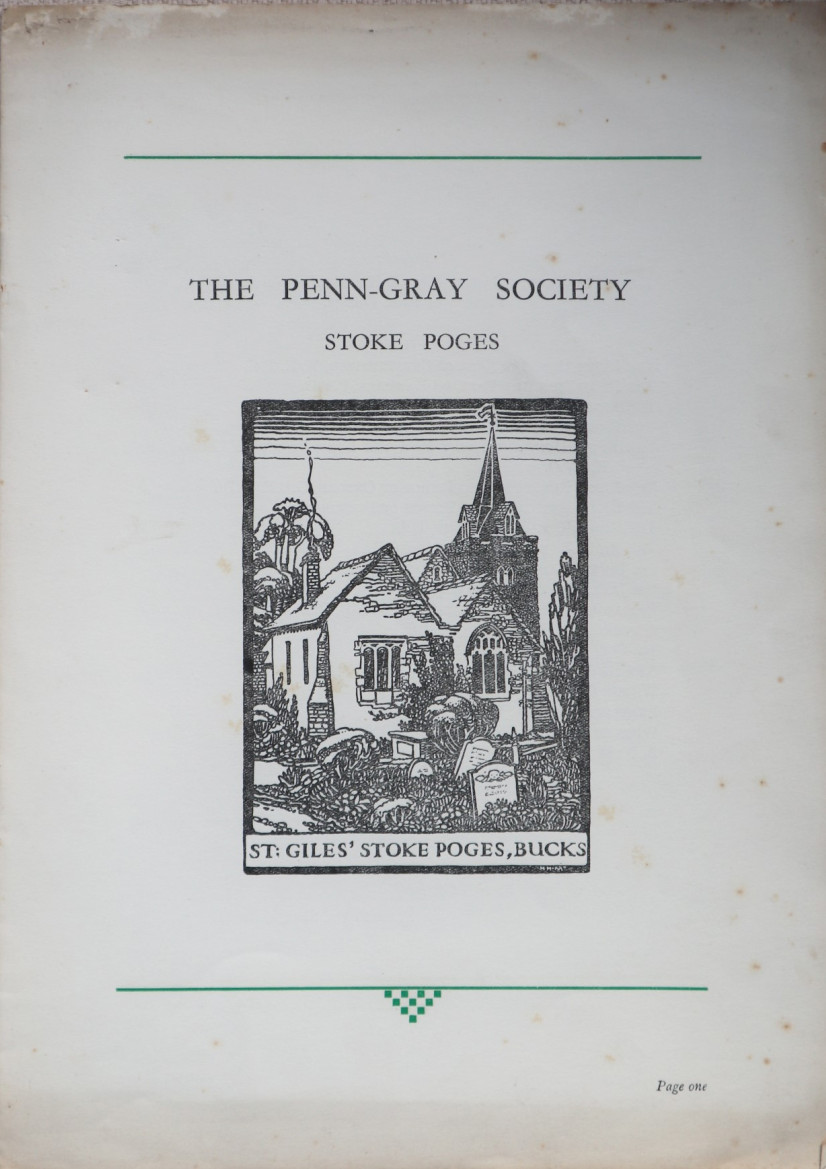
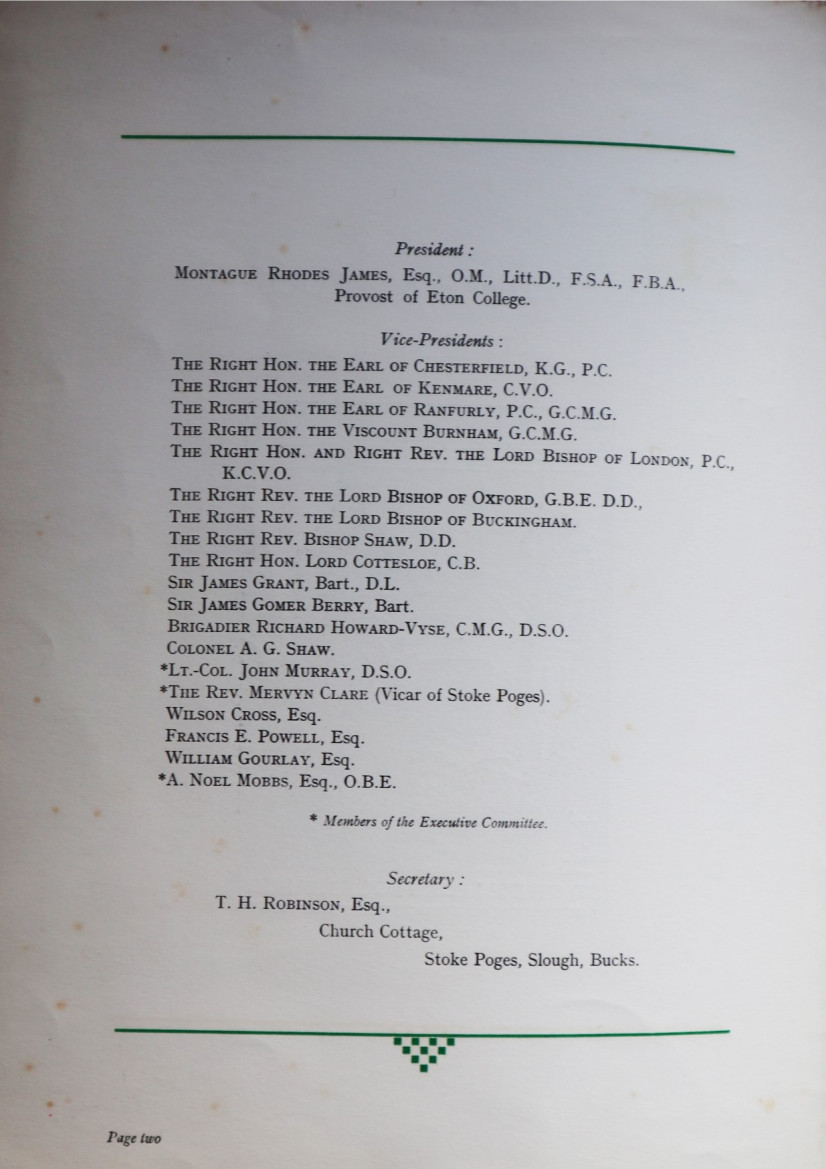
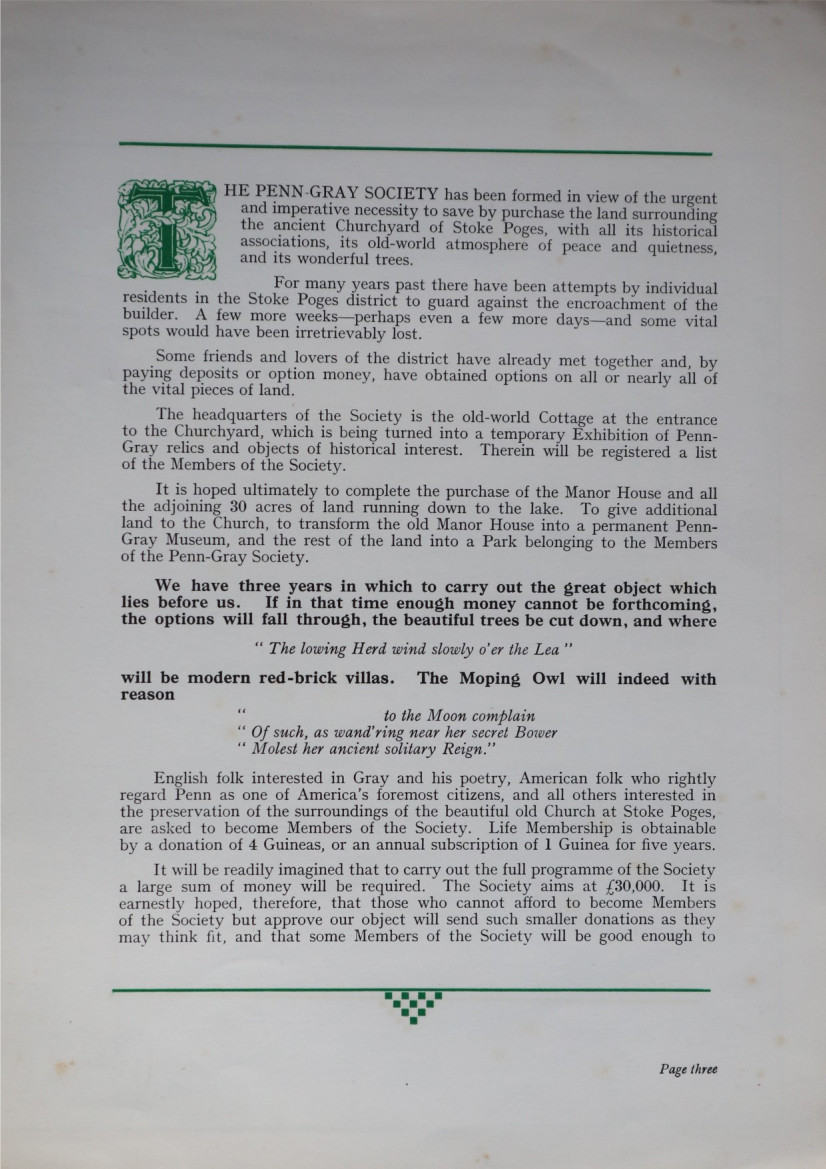
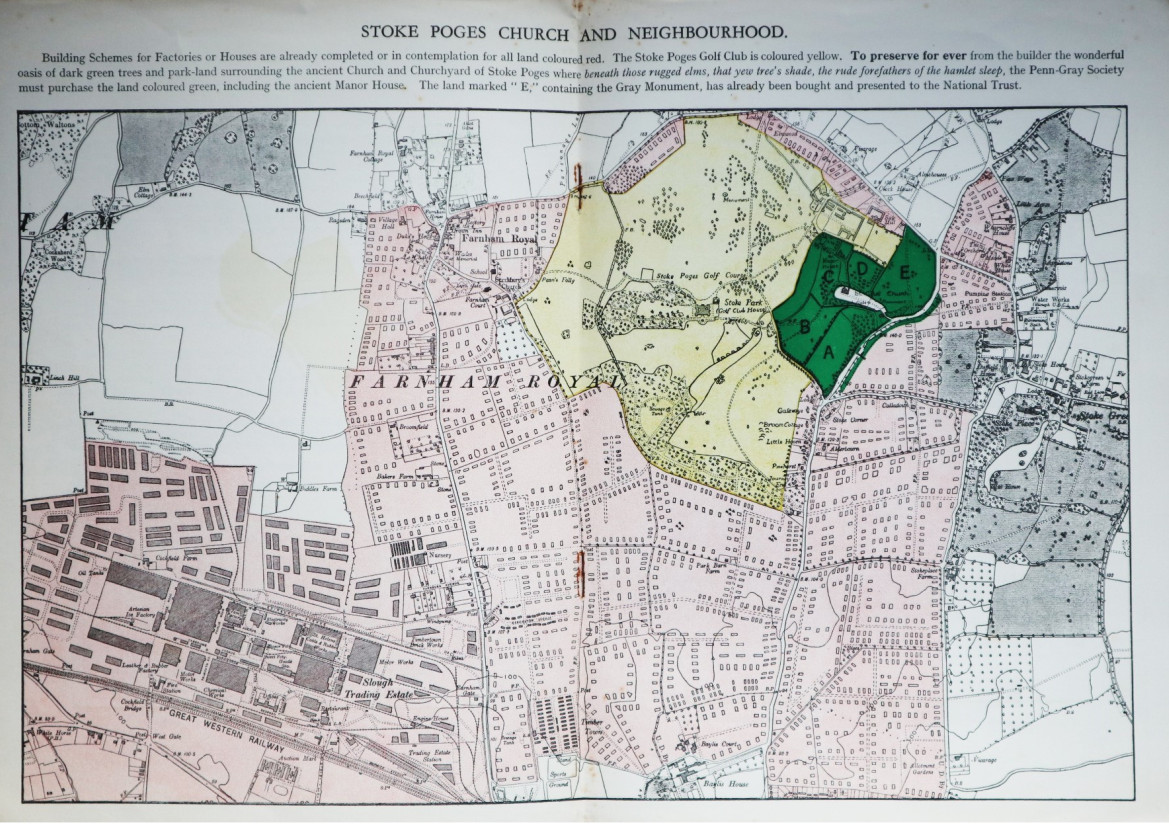
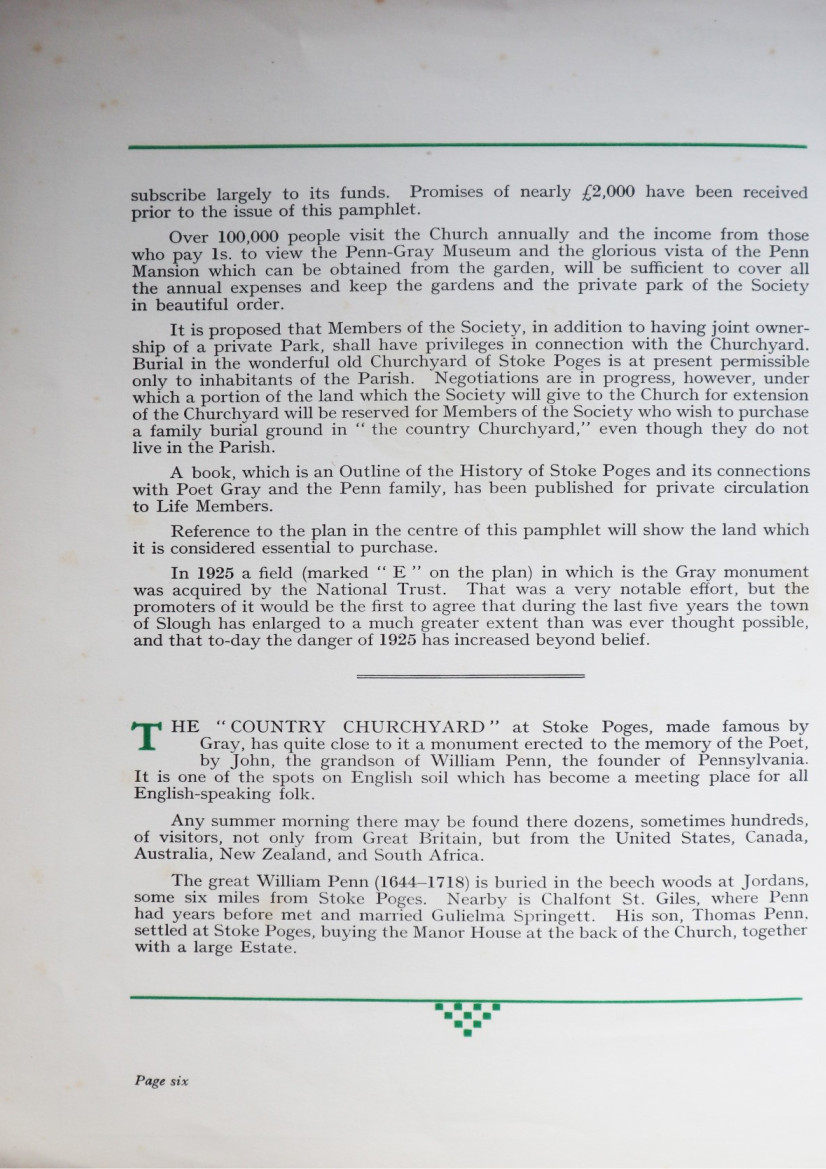
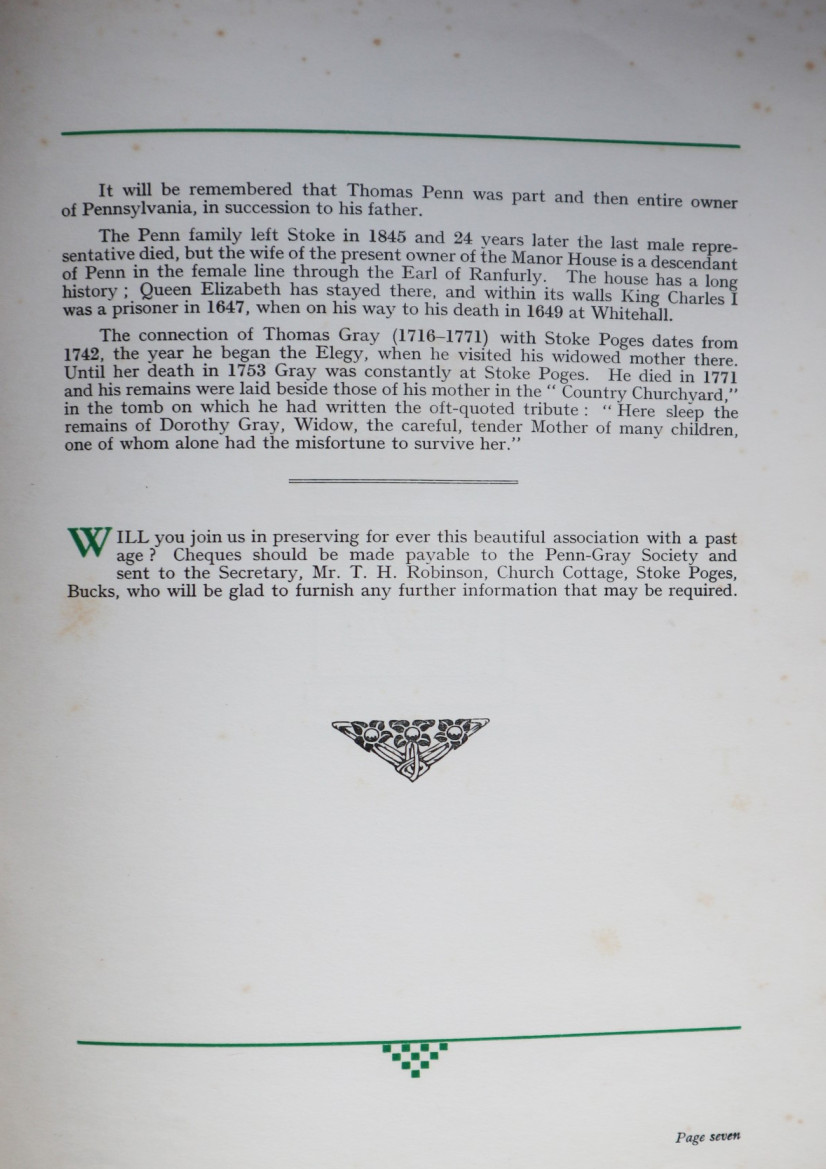
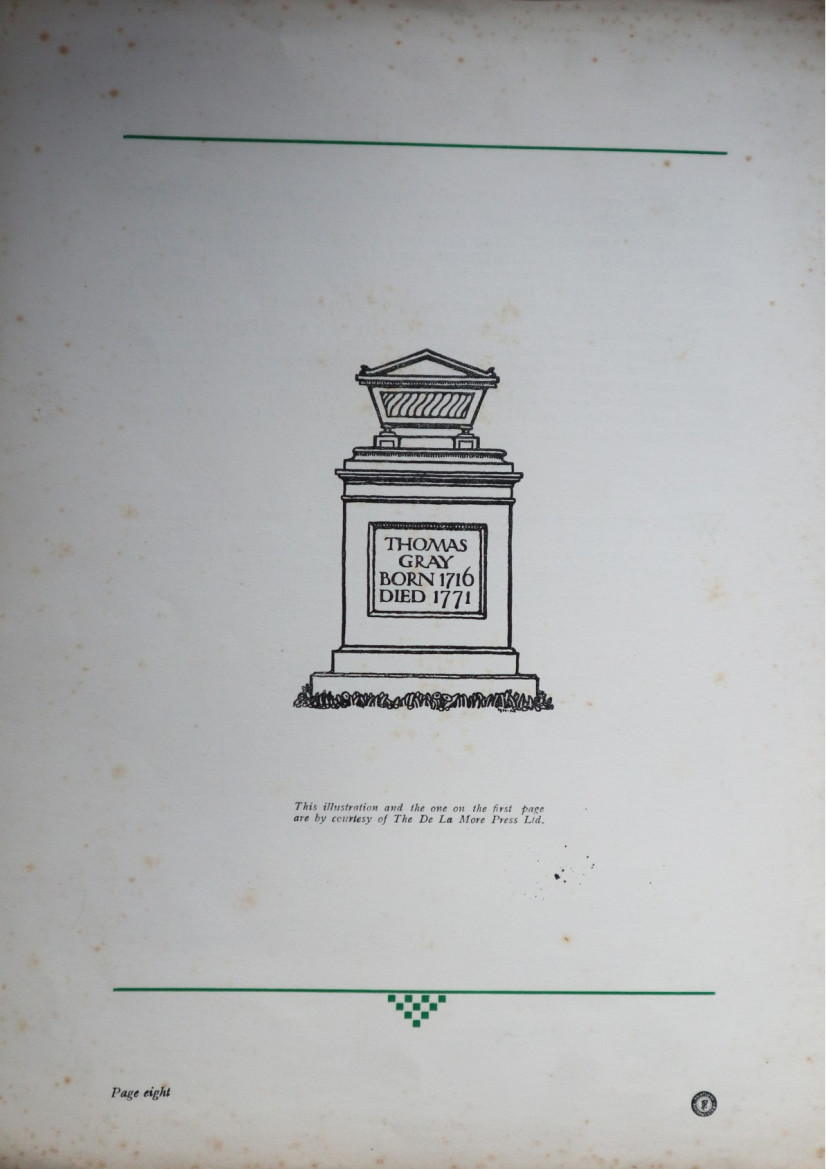
The promotional pamphlet published by the Penn-Gray Society to outline the aims of the group and garner support and funding. James is listed as president on page two. Reproduced with kind permission of the Stoke Poges Society.
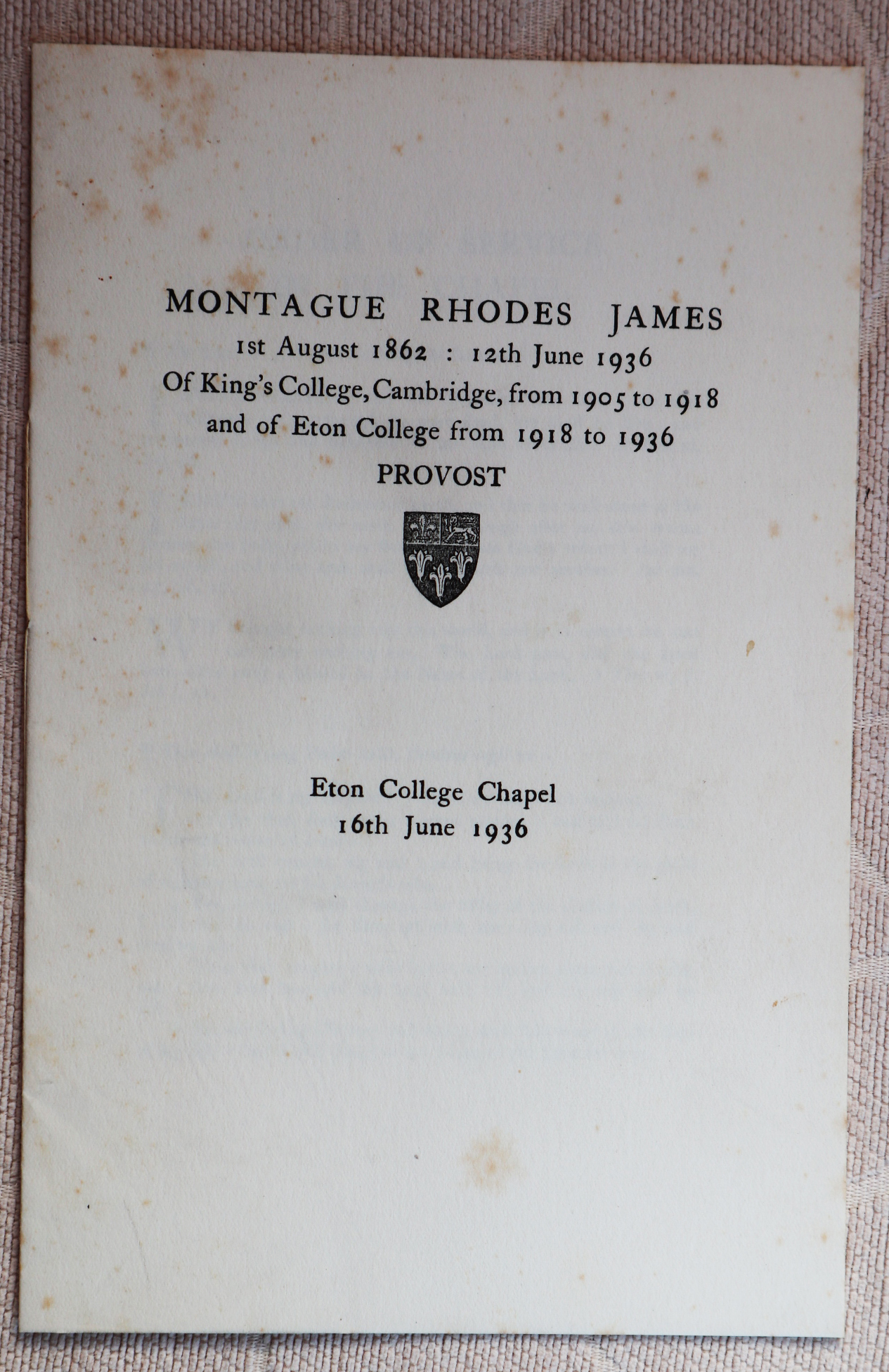
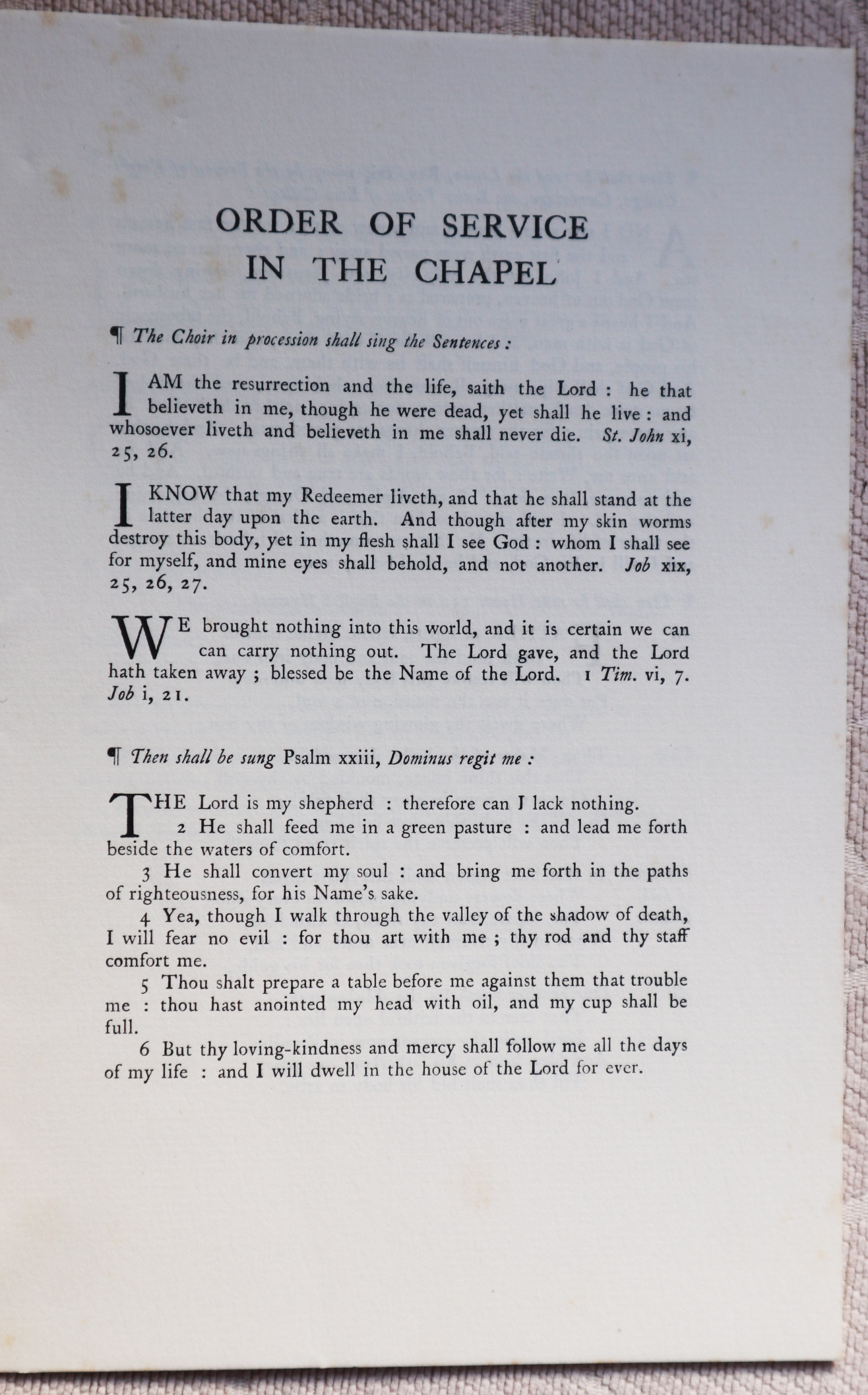
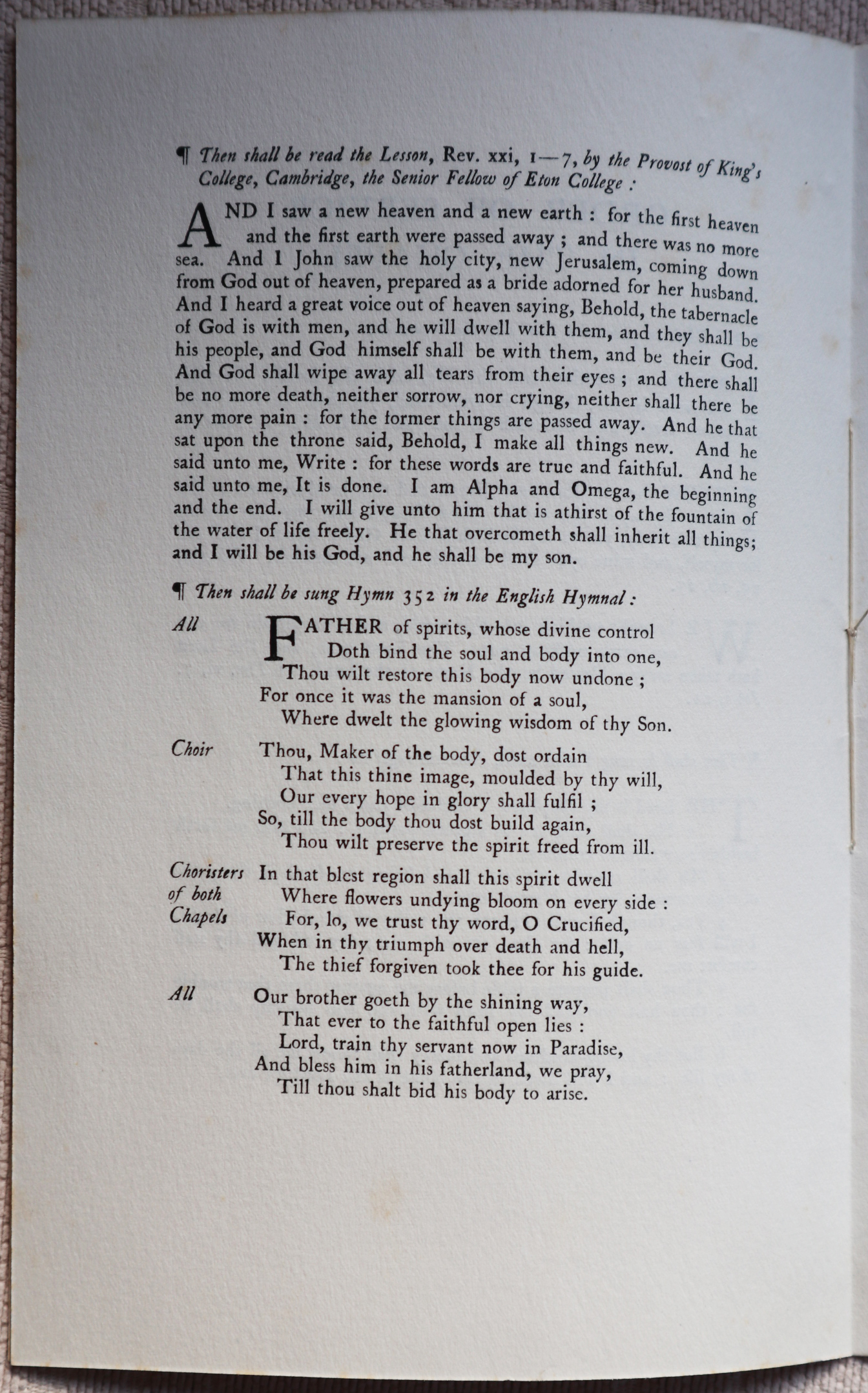
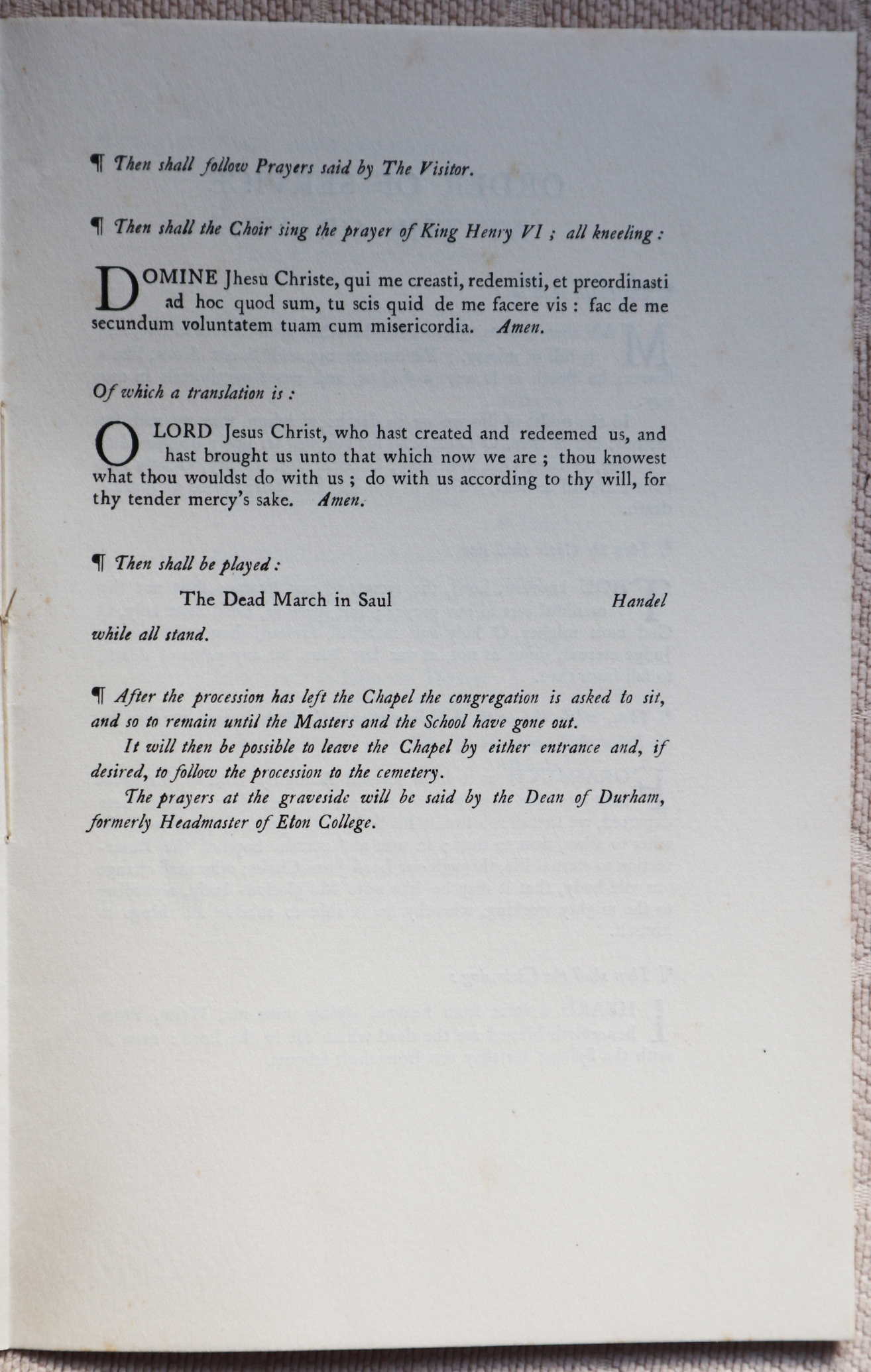
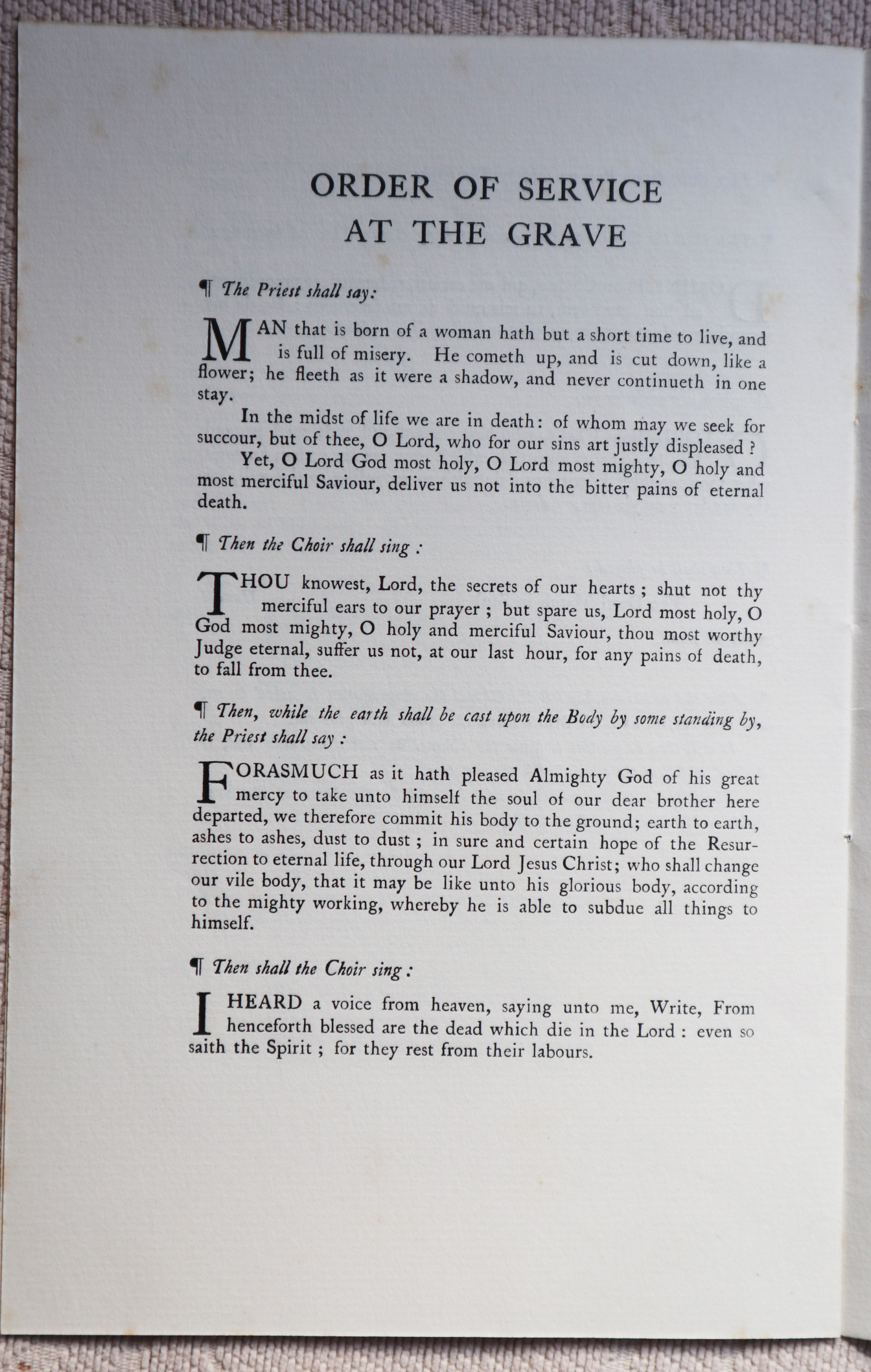

A copy of the order of service for the funeral of Montague Rhodes James, held in Eton College Chapel on 16th June 1936. Reproduced with kind permission of the Stoke Poges Society.

 Antiquarian Ghosts
Two minor notes. Florence Hardy was the widow of Thomas Hardy, and her use of “vulgarization” in her letter to the Times is presumably in its meaning of making something accessible and attractive to the general public, rather than its more recent sense of shoddy dumbing-down.
LikeLike
Many thanks for this information, Gareth. In terms of the intent of her letter, when reading the entire piece it certainly looks as though she was taking a very negative view of the plans, which seem to have been misinterpreted. In fact, it ends: “I expected many pens to leap into the inkpot in protest, but mine seems the only one”. You can find it in the April 4, 1934 edition. Two days later a rebuke from a member of the Penn-Gray Society, John Murray, was printed.
LikeLike
Many thanks for this fascinating post, and for your original research. I found it very helpful when trying to find out more about M R James.
LikeLike