It has been well over a year since I made my last post here, and for that I must apologise to regular readers. As I mentioned in my most recent update back in September 2021, I had at that time begun a programme of postgraduate study, and it transpires that such an undertaking leaves little time for extracurricular pursuits when combined with a full-time job and family life. This situation is likely to continue into the latter parts of 2023, but following that I hope to return to a schedule of more regular updates on various Jamesian topics as I have many ideas in mind to pursue.
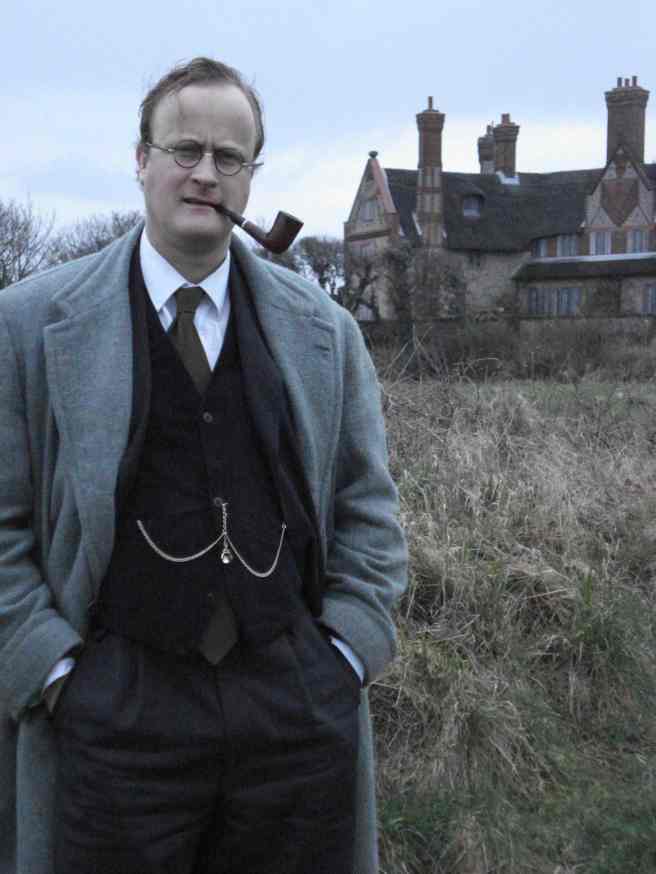
Nevertheless, for now I would like to share a ghostly (although admittedly non-Jamesian) tale with you all for the “dark season”. I have for some time now volunteered with Cambridgeshire Archives, the local authority archive for the county, in support of my studies. Each April, ARA Scotland, part of the wider Archives & Records Association, conducts a social media outreach campaign titled #Archive30 in which archives nationwide are encouraged to select and publicise thirty items from their collections related to a particular daily theme. One such theme of the 2022 campaign was “something scary”, and given my own interests I was tasked with creating a reading of a series four of ghostly 18th century letters.
The letters in question were penned in 1717 by the British Orientalist Simon Ockley, who at the time was imprisoned in Cambridge Castle as a debtor, and addressed to an acquaintance named as “Dr. Keith” (presumably James Keith, M.D., as indicated by the catalogue entry for three further letters held in the British Museum’s archive). In his correspondence Ockley recounts a series of supposed encounters with a malevolent spirit inhabiting the castle during his incarceration. Unfortunately due to their nature as real letters rather than a transcribed story, the final entry brings little resolution to the matter. The originals can be found within the Cambridgeshire Archives collections in a large volume of compiled original documents and transcripts titled Miscellanea Book ‘C’ (ref. no. City/PB Volume 31), within the wider Cambridge Borough: Palmer Barnard Volumes series.
My readings were originally uploaded to the Cambridgeshire Archives social media accounts episodically in four parts, but below I present the full recording. I must warn you that I am certainly no actor, but I hope you enjoy my own attempt at a ghost story for Christmas.
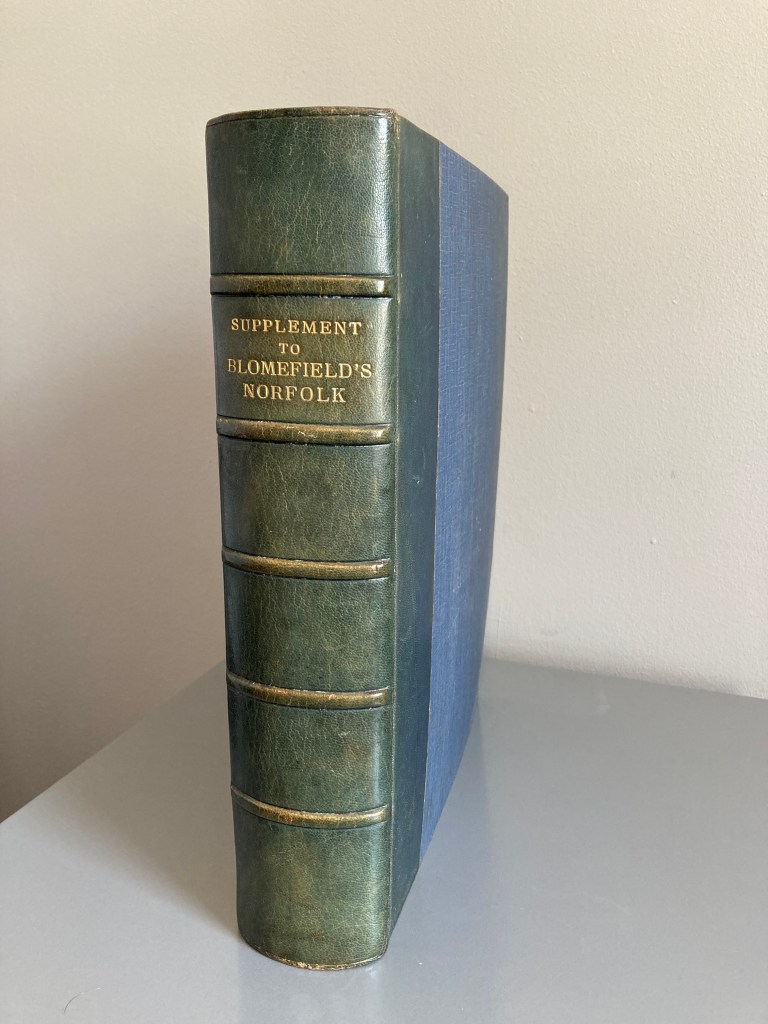
Time once again today for another general site update. My apologies for the somewhat sparse recent posting – alongside my regular day job I have embarked upon a programme of volunteer work and postgraduate study, and as a result additional space left for Jamesian pursuits has been somewhat lacking. Nevertheless, I have added a few new pages to the collection area detailing some of my newest acquisitions. The first of these I’d actually been sitting on since toward the start of the year and realised I’d somehow neglected to add it to the site. The book in question is a beautifully rebound copy of A Supplement to Blomefield’s Norfolk – an impressive tome published as a limited run in 1929 to provide additional supporting material to Francis Blomefield’s expansive 18th century work, and containing two contributions from M. R. James on church wall paintings in the county.
A holiday to Cromer, Norfolk earlier in the summer led to the discovery of the second gem in a rather eccentrically maintained bookshop (as we all know, the best kind) – a first edition copy of MRJ’s Old Testament Legends; a 1913 volume of biblical apocrypha aimed at a younger audience and featuring some wonderful illustrations by H. J. Ford.
The final two books were purchased on the doorstep of King’s College, Cambridge right after my recent chat with Mr. Robert Lloyd Parry of the Nunkie Theatre Company. Following the conclusion of our conversation we each headed over to St. Edward’s Passage, located just off King’s Parade, to visit the Cambridge bookselling institutions The Haunted Bookshop and G. David Bookseller. In the former I happened upon a copy of The Aldine Bible New Testament, Vol. 3, edited by James in the last year of his life, while in the latter I was lucky enough to acquire the elusive Magdalene College manuscript catalogue. My sincere thanks must go to Robert for spotting the catalogue hiding on a shelf I’d unsuccessfully scanned several minutes prior!
Aside from these acquisitions, for those interested I have a couple of very exciting M. R. James items in the pipeline which I hope to be able to share with you in the coming months. In addition, I am planning a number of new pieces of MRJ-related content, at least one of which I expect to publish before the end of the year, and have also recently obtained permission to include several more of James’ unfinished ghost stories on the site. Expect these to be added shortly.
In other Jamesian news Stephen Gray, proprietor of thin-ghost.org, has recently launched a new site, The Ghostly Fu Emporium, to showcase and offer for sale his fantastic spectral artworks and replicas. Anyone with an interest in M. R. James’ stories will love Stephen’s “Jamesabilia”, and I would advise you all to pay a visit and marvel at his creations.
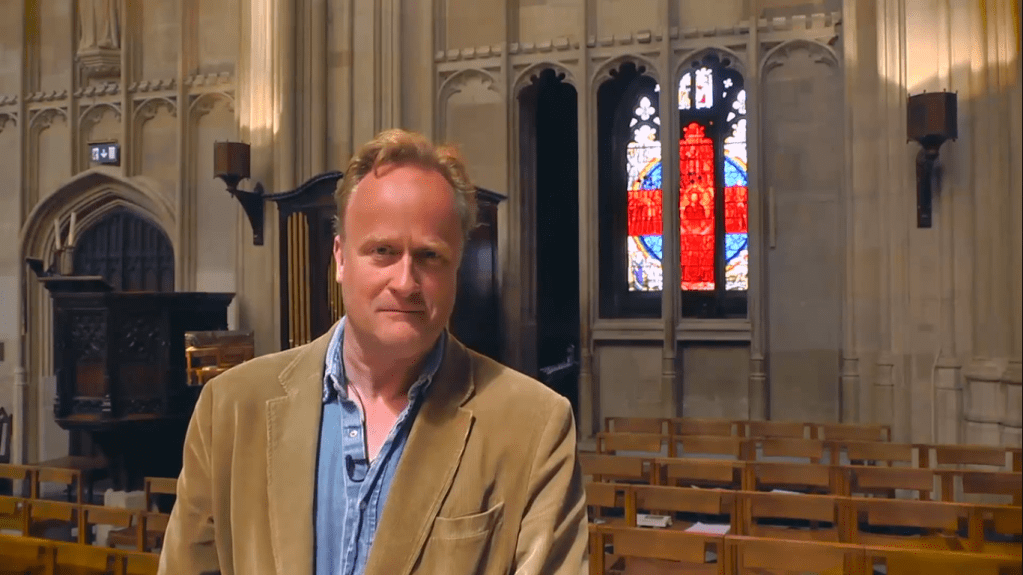
For many M. R. James aficionados, the name Robert Lloyd Parry will require no introduction. Since 2005, Robert has been touring his one-man M. R. James show, terrifying and enthralling audiences with an experience as close as possible to actually sitting down in front of James himself at one of the legendary Chit-Chat Club ghost story readings. In addition to his role as the world’s pre-eminent Jamesian storyteller, he has released a number of DVDs of his performances, edited several collections of ghostly tales, and co-authored and presented two documentaries on James’ life and works. I recently had the chance to sit down with Robert a stone’s throw from M. R. James’ beloved King’s College, Cambridge, to discuss his career, performances, and tracking down obscure publications by MRJ and his contemporaries.
Now based in the North West of England, I met up with Robert at the tail end of a week he’d been spending in Cambridge, undertaking research for a yet-to-be-titled follow-up to his recently compiled and edited short story collection Ghosts of the Chit-Chat, published last Christmas.
“Last year I compiled an anthology of stories written by people who were in the Chit-Chat Club with M. R. James, so this new book is kind of a sequel to that. It’s stories by people who weren’t in The Chit-Chat, but who were contemporary of M. R. James at Cambridge, or friends of his and so on, so it’s another anthology with very much a Cambridge slant to it. Where possible, I’m doing stories set in Cambridge or about Cambridge.”
The collection will feature a wealth of different ghost story authors, such as Richard Malden, F. Anstey, Shane Leslie, Barry Pain, E. G. Swain, Arthur Gray, as well as the mysterious ‘DNJ’, who published two stories in the Cambridge Review either side of the Great War, and whose true identity Robert hopes to finally reveal in the book.
The new collection will once again be published through Irish imprint Swan River Press, with whom Robert had also previously worked on his 2011 collection of Lucy M. Boston stories Curfew & Other Eerie Tales. The original Ghosts of the Chit-Chat anthology was born through conversations with Swan River’s founder, Brian Showers.
“When I first started doing the the M. R. James shows I made friends with Brian. He set up Swan River Press around about the same time as I was starting my touring. During one of our many conversations about M. R. James and ghost stories, he floated the idea for the book. At first it was just going to be a bit more like what I’m working on now – stories by M. R. James’ friends – but I soon realized that there was this small body of work by people who had actually been members of the Chit-Chat, and so it became based around that. I was quite pleased that things just kind of tumbled into place the more I researched it.”
At the time of writing, the full selection of authors to be featured in the upcoming collection has yet to be finalised. Robert has been hard at work researching figures for inclusion in the archives of various Cambridge colleges, which he admits has been slightly more difficult given present circumstances.
“With everything being shut it’s hard to get to the sources you want, but I had a really good day in the King’s College archive this week looking at some letters by a writer called Barry Pain, who’s a little forgotten now. He corresponded with Nathaniel Wedd, who was an exact contemporary of M. R. James and a classicist. He [Wedd] was kind of the opposite of M. R. James in that he wasn’t an old Etonian; he was more of a free thinker and not so conservative, yet there was this mutual respect between him and James. Unfortunately I haven’t found any ghost stories by Nathaniel Wedd, but I did discover that there are two unpublished novels of his, so next time I visit the archives I’m going to take a look at them. I mean they may be unpublished for a reason…”
Robert had also visited the Pepys Library at Magdalene College to consult A. C. Benson’s vast 180-volume diary, and we discussed his relationship with James, particularly with regard to the disapproval Benson occasionally expressed toward James, as quoted in Michael Cox’s 1983 biography M. R. James: An Informal Portrait.
“I think it’s the longest diary ever written or something like that. Extracts have been published, but the whole thing never will be, there’s just too much of it. I kind of suspect that very few, if any, have read the whole thing. I was just checking references in the diary, and it’s very interesting. Benson and James were old, old mates, and you do often have double-edged feelings about your friends, don’t you? It’s spread over the course of that many volumes, and it’s what he was feeling at that particular time. I think things are exaggerated because of a couple of quotations in the Cox biography.”
In addition to his long-established M. R. James performances, as an art historian Robert has for a number of years conducted a series of guided tours at Cambridge’s Fitzwilliam museum. James himself served as the museum’s director between 1893-1908 (previously assistant director), and Robert in fact spent some time working there himself immediately prior to founding the Nunkie Theatre Company.
“It was a lottery funded job to write the content for an online guide of the collections. It was basically researching 300 objects from across the whole collection, writing about them, and getting them online. It was a lovely job. It came to an end when the lottery funding ran out, and that’s when I started doing the M. R. James stories, trying to snatch a living from that. In a way I burned my bridges as far as museum work goes. I left that behind rather, and part of me would like to have carried on, but there we go.”
Rather appropriately however, Robert’s very first performance took place within the Fitzwilliam, in a space James would have been intimately familiar with:
“What I describe as James’ office is the Founders Library, which is the most magnificent room in the oldest part of the museum. It always was and remains the office of the Keeper of Manuscripts. In James’ day there wasn’t a Keeper of Manuscripts – it was just one overall boss and he had an assistant. The Keeper of Manuscripts still sits at a desk at one end of the room, surrounded by these magnificent mahogany bookcases and a lovely fireplace, and it was in front of that fireplace that I first did my show. That room really fires the imagination most of all. I first did it to tie in with an exhibition at the Fitzwilliam of illuminated manuscripts in Cambridge collections, and of course M. R. James was the éminence grise behind that. I did Canon Alberic’s Scrap-Book and The Mezzotint there, and they fit in well. In the story, the scrapbook ends up in the ‘Wentworth Collection’, so I renamed it the ‘Fitzwilliam Collection’ for the performance.”
I also asked Robert about any legacy, visible or otherwise, left from James’ time at the museum.
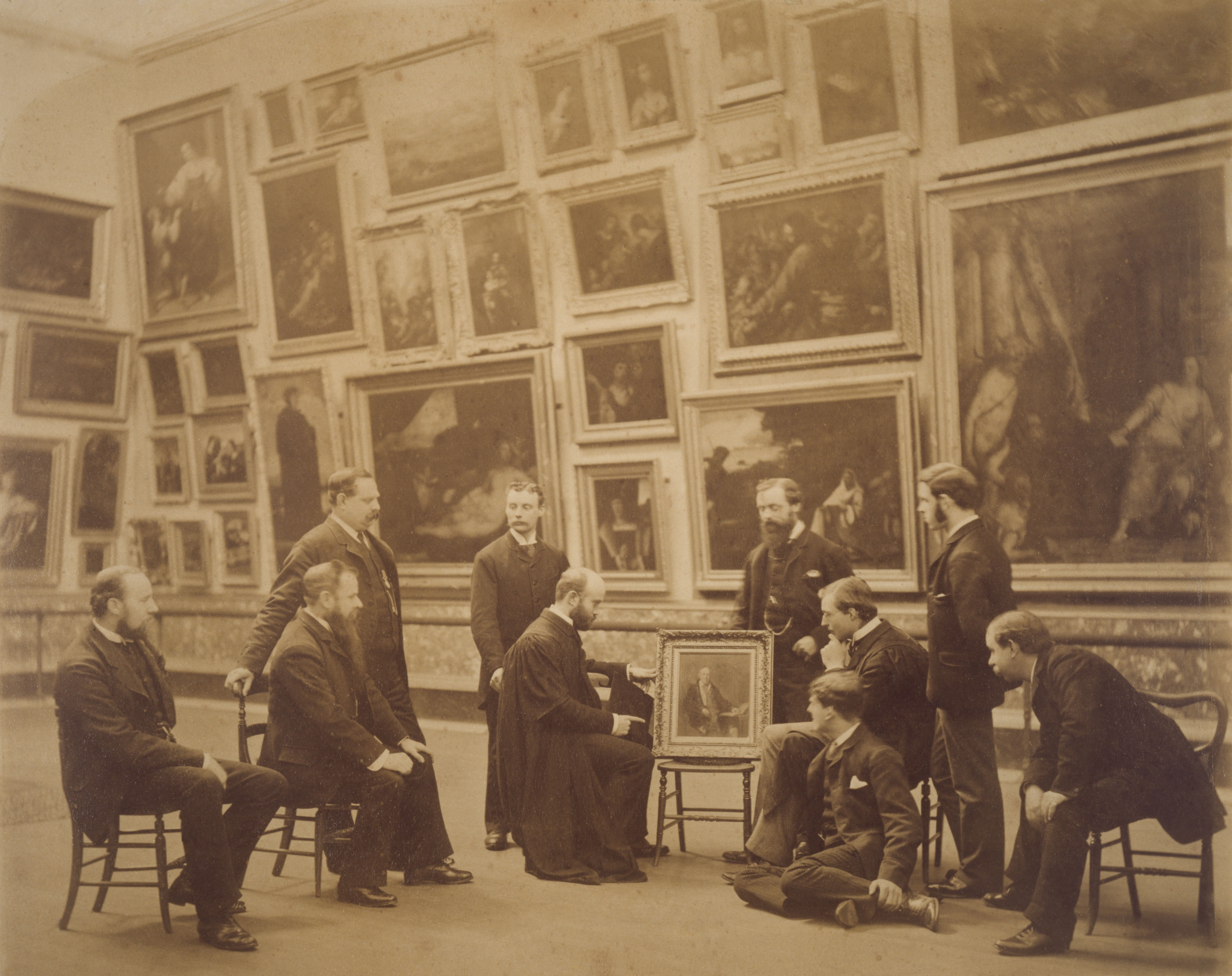
“There are the things that he acquired when he was the director. I can’t remember in terms of paintings and so on, but certainly a lot of manuscripts. There’s also a lovely picture of the staff of the Fitzwilliam Museum in the 1890s. They’re in the painting gallery, with lots of pictures hung terribly close together. M. R. James is in a group of about eight, and they’re looking at a painting of one of the founders.”
“A book that’s worth reading is The Fitzwilliam Museum: A History by Lucilla Burn. It was the museum’s bicentenary [in 2016], and they published a nice illustrated book, which discusses, amongst other things, the museum’s directors. You find out what James did in the role, which wasn’t an awful lot, but he was very modest about it. The guy who came after him [Sir Sydney Cockerell] was a real museum professional, and he said something along the lines of “I found a pigsty, and I turned it into a palace”, so the pigsty was under James.”
Robert has been touring his M. R. James shows for over fifteen years now, and has been given the chance to perform in some venues with a particularly impressive Jamesian pedigree.
“I have a regular gig at the provost’s lodge in Eton – an annual show there because the current Provost’s [The Rt. Hon Lord Waldegrave of North Hill] wife is a distant relation of M. R. James, and obviously with him being the provost they’re very keen on James. Once a year they invite selected members of staff and selected boys to the lodge, and in front of the fireplace I do a show. A couple of years ago I did a show in the provost’s lodge at King’s as well. I’ve also performed in the church at Great Livermere, and once in King’s College Chapel, which didn’t really work as it’s far too echoey.”
Over the years, Robert has adapted a wide selection of James’ stories for his performances and covered many of his most well-loved tales, from ‘Oh, Whistle, and I’ll Come to You My Lad’ to Count Magnus. I asked him about the process of bringing James’ stories to the stage, and whether there were any yet-unperformed tales he’d particularly like to add to his repertoire.
“M. R. James’ economy is one of the great things about him. People think he’s got this fruity language, but he doesn’t really; he’s got an old fashioned, deliberately mannered language, but what he writes is very tight. Those stories that aren’t fail because of it. Some of them I tell more or less as they’re written, but I’ve had to adapt a couple of them. The Residence at Whitminster I did condense and try to give it a bit more of a shape. I think James does sometimes get carried away with “stage Cockneys”. He found himself so hilarious. In Casting the Runes you’ve got about a page of the cockney ticket collector, so I cut a lot of that. He also loved mimicking old fashioned writing, so in The Residence at Whitminster you’ve got the girl’s diary that goes on and on and on.”
“I do feel a bit ashamed for having done this so very long, but there is still an audience for it. I think I’ve done all those that I consider to be the best ones, but there are couple left I could quite happily do. An Episode of Cathedral History I’ve always liked very much. I used to do The Stalls of Barchester Cathedral, but I couldn’t come up with a way of making it work as a live performance because it’s mostly diary entries. Me just reading the diary entries is rather boring to look at.”
The recent social restrictions have naturally affected Robert’s usual touring schedule, and stalled some planned performances that had been due to begin this year.
“Since last March I’ve not really been able to perform. I was able to fit in a couple of M. R. James shows in October last year, between lockdowns, but that’s all I’ve done. I had a whole tour of an H. P. Lovecraft show set up for last spring and within ten hours that had just disappeared. It was a performance of two Lovecraft stories: Pickman’s Model and The Music of Erich Zann. I did it as a supported project by Harrogate Theatre and performed it a couple of times. I wasn’t fully pleased with it but I was going to take it on tour when COVID hit. Whether I’ll revive that tour or not I don’t know. I did both of them online and they went down quite well, so I might.”
Aside from the planned H. P. Lovecraft shows, Robert has previously performed works by several other authors besides M. R. James. I asked him how he’d found the experience as an actor of stepping outside of the world of ghost stories.
“I did The Time Machine by H. G. Wells as well. The problem with that was, I was proud of the show and people liked it, but more often than not it was played before really bad houses. I’ve found an audience for M. R. James, and I was surprised there wasn’t one for H. G. Wells. There are a lot of authors I would quite like to do, but whether they’d get an audience I don’t know. I’d like to do Arthur Machen, but the world at large would not come to see Arthur Machen. So that’s the corner I find myself in. There are plenty of good stories out there, but it’s a big undertaking to adapt, write, learn and rehearse them.”
Naturally, with a shared interest in James’ published works, Robert and I ended up on the topic of book collecting, and he briefed me on some of his favourite personal acquisitions.
“My best ever M. R. James buy was on eBay. Somehow I got a copy of Eton & King’s, the first edition, for £10. There were other people bidding as well – I don’t know how I got it. I was chuffed with that, and had it on my shelf with a few other books. A while later, Brian Showers in fact was visiting, and he picked it up and looked through, and then suddenly stopped and said ‘Have you seen this?’ I hadn’t, but inside was a letter from M. R. James to the the original owner of the book saying “thank you for your letter”, headed “The Lodge, Eton College”.
Robert’s copy of Eton & King’s, complete with letter from MRJ himself to the book’s original owner.
“I recently bought this book that was actually by E. G. Swain; not published in his name but under a pseudonym. It’s a selection of plays that he wrote for the choristers at King’s, with M. R. James. I don’t think James necessarily helped him write them, but it was part of the entertainments they put on, the culmination of which of course was A School Story. He wrote that for the choristers, but leading up to that, there were these kind of skits, pantomimes and comic plays. Occasionally in G. David’s [bookshop] around the corner I have found some books by James. I found The Biblical Antiquities of Philo in there, which I was quite pleased with. I’d long wanted to find a copy of Old Testament Legends browsing an antique shop, but I never found it in real life so ended up ordering it online.”
Robert has released a number of professionally-filmed DVDs of his performances, and in recent years has made and presented two documentaries on James’ stories, 2017’s Wits in Felixstowe, which delves into the background and writing of ‘Oh, Whistle, and I’ll Come to You My Lad’, and 2019’s Dim Presences, which covers A Warning to the Curious. Both are excellent documentaries and well worth seeking out for any James fan, and I wondered if there may be a third instalment in the pipeline.
“Christopher Thom, who I collaborate with, is a cameraman and a director, and we work on them together. In fact next week we’re going to be filming a new DVD which I’m thinking of calling M. R. James: Live at the Chit-Chat. It’s going to include Canon Alberic’s Scrap-Book and Lost Hearts, just candle lit and single-take like the other DVDs I’ve done; very simple and straightforward. For that DVD I’ll do a short documentary – probably it’ll just be a talking head of me discussing the Chit-Chat Club. But yes, I’d love to do another full-fat documentary. I want to go to Scandinavia and do one about James’ time there, covering Count Magnus and Number 13. I will at some point release a Scandinavia DVD with those two stories on it, and I’d love to do some filming there. I’ve got a couple of things I think I’ve found that are not generally known about – the inspiration for Count Magnus and so on.”
Despite Robert’s extensive filmed back catalogue of M. R. James tales, he has no desires to produce any fully-fledged filmic adaptations of the stories himself.
“I do think the best way of presenting them is simply as storytelling. I mean I certainly I wouldn’t turn my nose up at that kind of part, but it’s not something I’m planning to do myself. I was in Mark Gatiss’ documentary about M. R. James [2013’s M. R. James: Ghost Writer]. I remembered he had expressed a desire to do an adaptation of Count Magnus, so I said, “if you ever do Magnus then consider me for Mr. Wraxall”.”
With life returning to some semblance of normality, Robert will be returning to the stage with a full tour beginning this Autumn. He currently has a string of dates for M. R. James performances planned, running from October to December, and full details of the schedule and tickets can be obtained through the Nunkie Theatre Company website.
I would like to offer my sincere thanks to Robert for taking the time to conduct this interview. If you would like more information about his M. R. James project and other endeavours, please visit the Nunkie website. Robert also has a fantastic YouTube channel which is regularly updated with readings of stories by James and many other authors, and a Bandcamp page with a selection of audiobooks available for purchase. Both Wits in Felixstowe and Dim Presences are currently available to stream via Amazon Prime. Ghosts of the Chit-Chat is still available as a paperback through Swan River Press.
It’s been a few months since my last update here. In truth I’ve been taking a bit of a break and pursuing other hobbies, and new book acquisitions on the M. R. James front have been few and far between in recent weeks. I have, however, made a few small updates to the site over the past few days, and thought it would be worthwhile covering these in a short post.
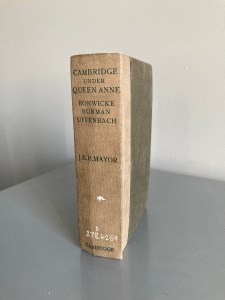
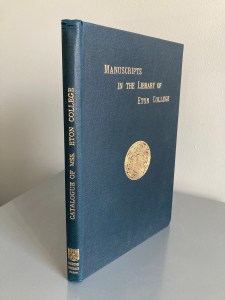
Firstly, a further three books I acquired between the tail end of last year and the first couple of months of 2021 have been added to the collection pages. Two of these are works by MRJ – Cambridge Under Queen Anne and A Descriptive Catalogue of the Manuscripts in the Library of Eton College. The Eton catalogue, which I had been coveting for quite a while, came with an interesting bundle of letters, dating from the early 1970s, from the ‘Keeper of Library and College Collections’ at Eton to the previous owner of the book – a university academic who required a copy for some of his own manuscript research. Obviously I only have one side of the correspondence, but it appears the academic in question received the book from Eton in exchange for a couple of other titles gifted to the library. A visit to the college itself was subsequently organised in mid-1972. Unfortunately due to the dates involved I cannot at present include any images of this correspondence on the site for data protection and copyright reasons.
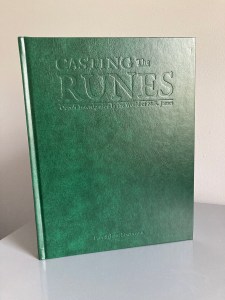
The third title is something a bit different in the form of a copy of the new Jamesian pen-and-paper roleplaying game, Casting the Runes, which was published by The Design Mechanism earlier this year. At this point I haven’t yet had time to fully delve into the intricacies of the game, but I’m planning to cover it in greater detail in a future post.
Aside from these few new book pages, I’ve been making some minor style and formatting changes to the site to compensate for some broken functionality introduced by a recent update to the WordPress editor, and have also added James McBryde’s four original illustrations for Ghost Stories of an Antiquary to the relevant story pages (Canon Alberic’s Scrap-Book and ‘Oh, Whistle, and I’ll Come to You, My Lad’).
I’m planning a number of reasonably extensive pieces and articles this year, so hopefully I’ll have some more substantial content for you soon. As always, any new book acquisitions will continue to be added to the collection pages for those who are interested in such things.
Just a short post today to bring you all three pieces of exciting news for the M. R. James aficionado:
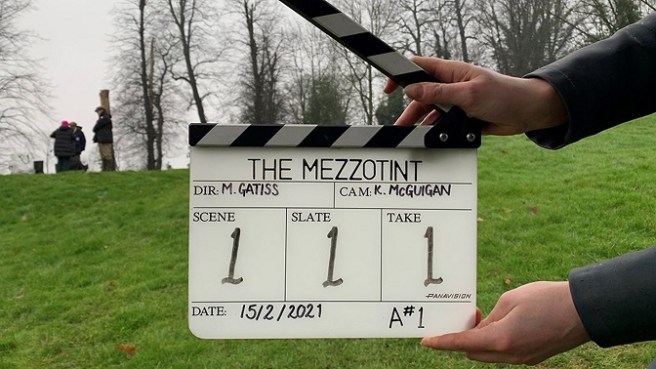
Fans of the long running A Ghost Story For Christmas strand will be delighted to learn that writer/director Mark Gatiss will be making a return to BBC Two this Christmas with another Jamesian adaptation, The Mezzotint. Details have just been revealed following completion of principal photography, which, judging from the slate pictured on the BBC website, took place entirely last week.
Rory Kinnear will star as the protagonist and recipient of the titular mezzotint, Mr. Williams, and Robert Bathurst will fill the role of Mr. Garside. The BBC press release also revealed the names of an additional five cast members, including Frances Barber as a “Mrs. Ambrigail”, suggesting a significant expansion on James’ original story and, I expect, a dramatisation of the actual events depicted in the haunted print. While some will no doubt find issue with these changes, it seems to me a justifiable direction to take when attempting to translate this particular story to the screen. Despite some alterations I’ve largely enjoyed Mr. Gatiss’ previous adaptations and am keen to see what he does with The Mezzotint. It’s no bad thing that those of us interested in James have such a high-profile individual willing and able to get these dramatic works commissioned in the first place for us all to enjoy, and I was most disappointed we missed out on a new entry into the series in 2020.
Continuing the theme of adaptations of James’ works, director Chris Crow has just announced a new feature-length adaptation of James’ classic A Warning to the Curious, currently in development and scheduled to begin shooting this coming winter. According to the post on Chris’ website, the film “embraces the original story whilst elevating the Folk Horror and Psychological Horror elements”. What this means for adherence to the spirit of the original tale remains to be seen, but I will certainly be following this project with interest.
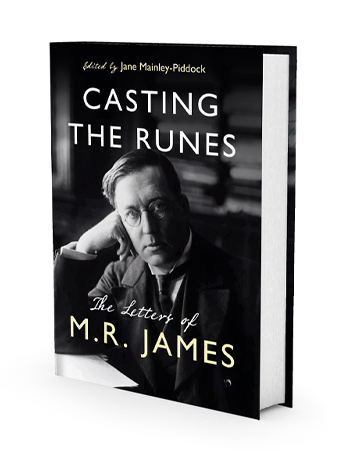
Finally, and slightly late, is news that Dr. Jane Mainley-Piddock’s new book Casting the Runes: The Letters of M. R. James, which I have discussed previously, achieved its funding goal through crowd-funded publisher Unbound toward the end of January, and is now in the writing stage. The most recent update from the start of February provides an insight into the current state of progress with the transcriptions. Following the funding goal announcement, Dr. Mainley-Piddock has also revealed that the aforementioned MRJ superfan Mark Gatiss will be providing a foreword to the completed book.
Although the funding target has now been met, there is still time to back the project and receive one of the numerous available rewards should you wish to. Full details (along with updates) can be found on the project’s page over on Unbound.
Throughout his life, M. R. James was involved in the publication of several facsimile editions of important medieval manuscripts, for which he would provide introductions and detailed notes in the same vein as his extensive MS. catalogues. These volumes were primarily produced by the exclusive bibliophilic society the Roxburghe Club, of which James became a member in 1909, but several were issued by other publishers and institutions.
One such book is The Canterbury Psalter (1935) – a limited printing of a facsimile edition of the 12th century Tripartitum Psalterium Eadwini (Trinity MS R.17.1), and also known as the Eadwine Psalter; so named for the scribe Eadwine of Christ Church, Canterbury, who is believed to have overseen the production of the book (although his exact identity and role in the creation of the manuscript remain unclear). The original work, now housed in the Wren Library at Trinity College, Cambridge, is a particularly exceptional example of an illuminated manuscript of the time, and as a psalter is predominantly comprised of the Book of Psalms, written in Latin, Old English and Anglo-Norman, and copiously illustrated throughout.
James had covered the MS. extensively in his four-volume The Western Manuscripts in the Library at Trinity College, Cambridge: A Descriptive Catalogue (Cambridge University Press, 1900-1905), but had commented at the time that he was unable to describe the illustrations in the full detail he desired, and hoped to be able to return to the task at a later date in a separate publication. That opportunity eventually presented itself in 1934 when James was asked by the Friends of Canterbury Cathedral to edit and supply an introduction for the facsimile, a task which by all accounts he was most enthusiastic about. As he states in a letter to Gwendolen McBryde dated 31st January 1934:
“And I have hopes of the illustrations of the Canterbury Psalter turning up before long which would furnish employment of the kind I like. I have, in fact, begun to write the introduction to my proposed description of it.”[1]
James’ involvement with the book is mentioned in a further four letters to Gwendolen, although predominantly as a series of complaints about the punctuality of the publisher in supplying illustrations and proofs. He seems to have completed his work somewhere between the 6th and 17th of April 1935 despite having “been extremely lazy”.
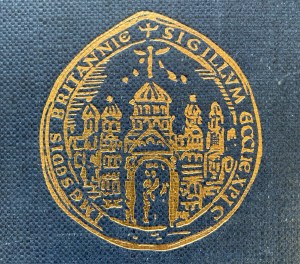
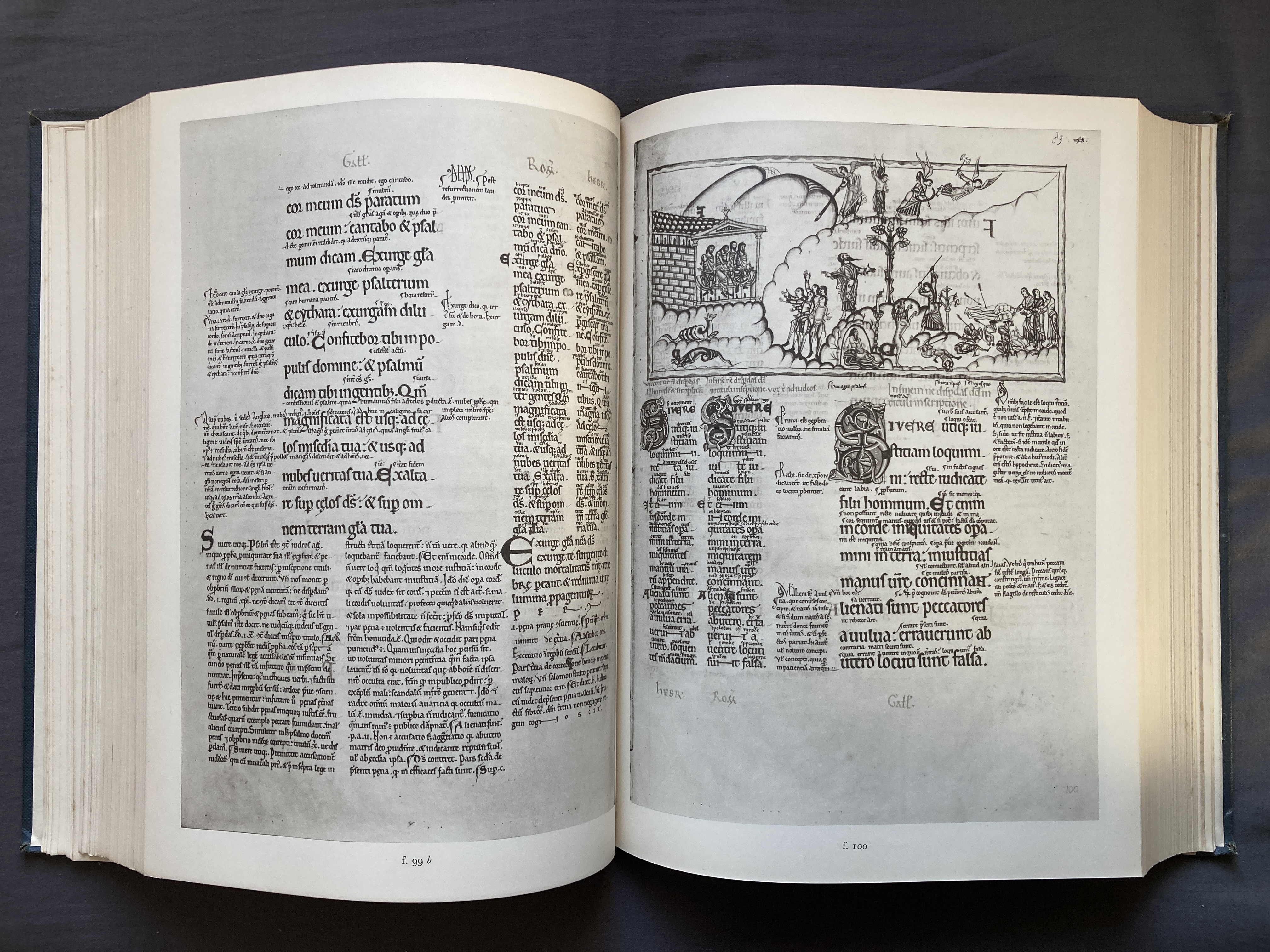
The finished book, printed by Percy Lund, Humphries & Co., is a rather large and weighty volume consisting of an extensive fifty-six page introduction and description by MRJ, a short index, and the facsimile of the MS. itself as monochrome plates, with four pages also reproduced in full colour.
Figs. 99b and 100
James introduces the book with a detailed description of the physical tome, some comments on Eadwine, and the history of the manuscript itself:
“The primary object of the present introduction is to furnish an explanation of the pictures in this famous manuscript. With the written text I am not so nearly concerned, though much of it is of the highest interest, and, naturally, enough will have to be said about it to give the reader his bearings. A beginning may be made by setting out the main facts about the book.
It is a massive volume, measuring 18 by 13 inches, and containing 286 leaves, plus fly-leaves. It is bound by wooden boards which have the remains of a sixteenth-century leather covering with fine gold tooling. A metal boss in the centre of each cover bears a Tudor rose; the book has been re-backed, the clasps are gone.
It was written at Christ Church, Canterbury, about the middle of the twelfth century by a scribe named Eadwine, a monk of the house. His portrait, drawn by himself, occupies a whole page in it. No facts about him are forthcoming from other sources: he is not even mentioned, so far as I see, in the lists of the Christ Church monks drawn up and annotated with great care by W. G. Searle in his book Christ Church, Canterbury (Cambridge Antiquarian Society, 1902). We can, however, tell something about the history of the book. It is entered in the medieval catalogue of the Christ Church library, which was drawn up for Prior Eastry early in the fourteenth century, and is preserved in the Cottonian MS. Galba E IV. It was last edited by me in 1904 in Ancient Libraries of Canterbury and Dover. Here on p. 51 we have a list of Libri de armariolo Claustri, i.e., “books kept in the press in the cloister” – a kind of reference library; third in this list (No. 323 in the whole catalogue) is
Tripartitum psalterium Edwini.
At Canterbury it remained until it was presented to Trinity College, Cambridge, by Thomas Nevile, Master of Trinity, 1593-1615, and Dean of Canterbury. It is No. 110 in the list of 126 MSS. which he gave, and is entered as
Psalterium cum tribus translationibus
Its present press mark is R.17. 1 (No. 987 in my catalogue).
I will add that it was possibly not the only book of Eadwine’s making at Canterbury: for in the catalogue referred to just now we find, in a list of Libri Anglici, i.e., Anglo-Saxon books, a “Liber Edwini Anglice” of unspecified contents. (Anc. Lib., p. 51, No. 319).”
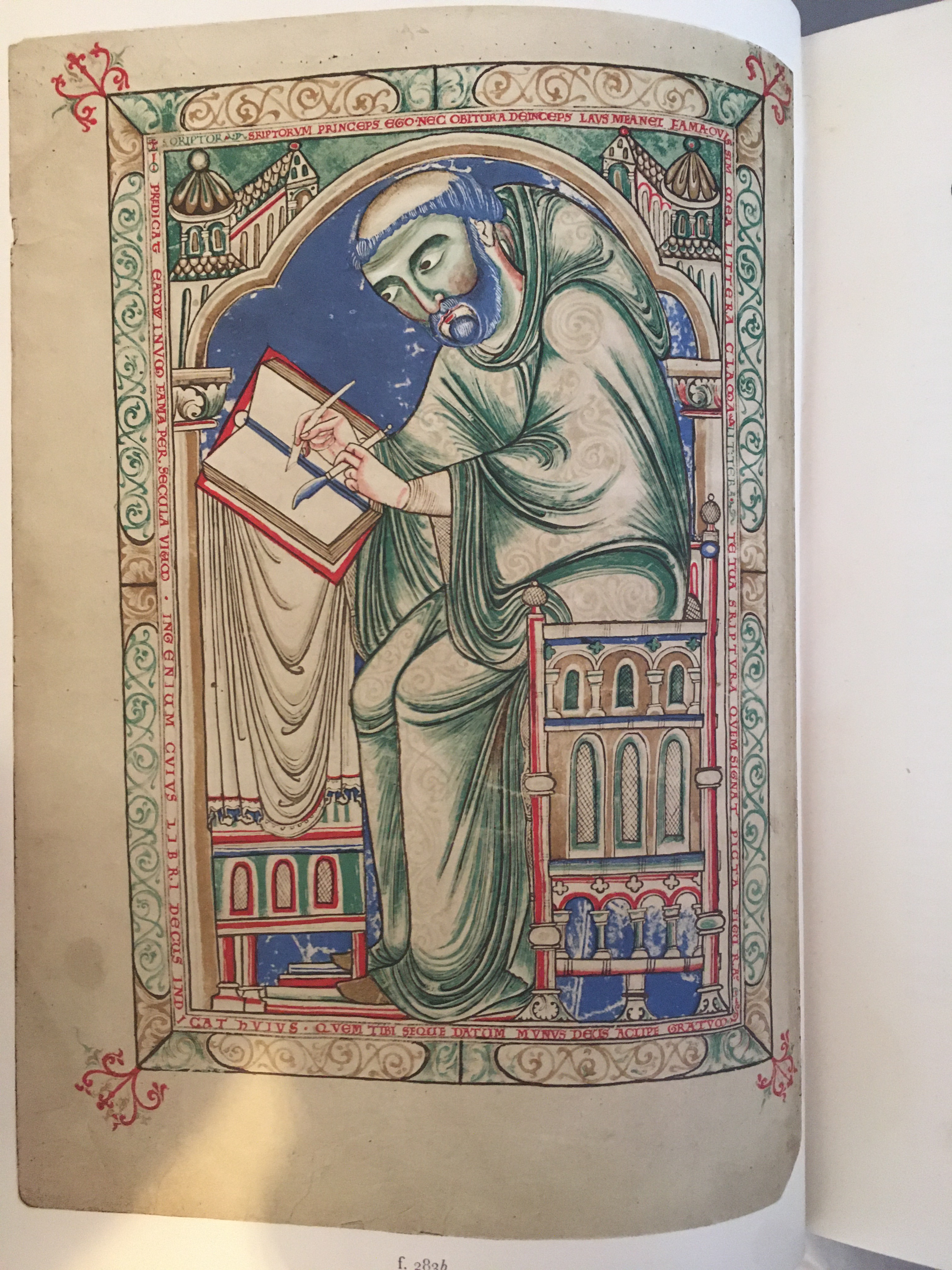
The portrait of Eadwine mentioned by James, unusual for an illuminated manuscript, is one of the four pages beautifully reproduced in colour in this facsimile. The portrait itself is bordered by an inscription in Latin which provides us with some information on the origins of the manuscript, and which James helpfully transcribes in his accompanying notes as follows:
“SCRIPTOR (sc. dicit). S(C)RIPTORVM. PRINCEPS. EGO. NEC. OBITVRA. DEINCEPS LAVS MEA NEC FAMA. QVIS (continued down R. side). SIM MEA LITTERA CLAMA. LITTERA (sc. dicit). TE TVA S(C)RIPTVRA. QVEM. SIGNAT PICTA FIGVRA (then follows a monogram of I and O referring to the top L. corner, where it is repeated). PREDICAT EADWINUM FAMA PER SECULA VIVUM. INGENIVM CVIVS LIBRI DECVS IND (bottom) ICAT HVIVS QVEM TIBI SEQUE DATUM MVNVS DEUS ACCIPE GRATVM.”
As is often the case with Latin passages in his work, MRJ did not provide an English translation, presumably under the (likely correct) assumption that the readership of the book would understand the original. A later translation by T. A. Heslop[2] reads thus:
“The scribe: I am the chief of scribes, and neither my praise nor my fame shall die; shout out, oh my letter, who I may be. The letter: By its fame your script proclaims you, Eadwine, whom the painted figure represents, alive through the ages, whose genius the beauty of this book demonstrates. Receive, O god, the book and its donor as an acceptable gift.”
Eadwine’s portrait
If you’re interested in looking at the psalter itself in more detail, thanks to the wonders of modern technology the entire manuscript has been scanned and digitised by Trinity College (along with many others in the collection) and can be viewed and downloaded as high-resolution images on the Wren Library website.
I managed to acquire a copy of The Canterbury Psalter towards the end of 2020, although have been holding off on adding it to the collection pages until I’d had time to give it the attention it deserves in the form of this article. Despite its limited print run there are actually a number of copies available for sale at the time of writing, although most are priced substantially higher than the sum I paid for mine.
Presentation page to John Victor Macmillan, D. D., Bishop of Guildford
The copy I purchased contains an elaborately hand-written presentation page (the erased pencil lines are still partially visible) on one of the blank fly-leaves toward the front, gifting the book to John Victor Macmillan, D. D. (1877-1956). J. V. Macmillan, the son of Alexander Macmillan, co-founder of publisher Macmillan & Co., and uncle of future Prime Minister Harold Macmillan, was a former Etonian and residentiary canon of Canterbury Cathedral, Archdeacon of Maidstone and Bishop of Dover, who in 1934 had moved on to become the second Bishop of Guildford. The page is signed by the dean at the time, the famous Marxist “Red Dean of Canterbury”, Hewlett Johnson, along with canons Samuel Bickersteth, T. G. Gardiner, Edward H. Hardcastle, and J. M. C. Crum. More images of the book are available on the collection page.
It’s endlessly fascinating to me when a book of some age comes into my possession bearing a name, signature or some other connection to a former owner, and in circumstances where the individual is particularly noteworthy allowing the opportunity to research them in more detail. It’s certainly one of the joys of collecting old books that traces are often left behind that connect them to a former life – and in cases like the Eadwine Psalter itself leave behind a puzzle to be solved. I suppose like many things we never really “own” our books, but merely look after them for the next person.
Duncan J. Rule
[1] Letters to a Friend, ed. Gwendolen McBryde(Edward Arnold, 1956), p. 200.
[2] The Eadwine Psalter: Text, Image and Monastic Culture in Twelfth-Century Canterbury, ed. M. Gibson et al (Penn State University Press, 1992), p. 180.
Welcome back for the first post of the new year, in the depths of the dark season. I had originally begun to put something together for a planned pre-Christmas post, but it ended up a somewhat directionless ramble on the BBC’s A Ghost Story for Christmas strand that I ultimately decided not to publish. While enough has probably been said about that particular series over the years, I’m sure that I’ll return to the subject in detail at some point when I’m able to organise my thoughts on it slightly more coherently.
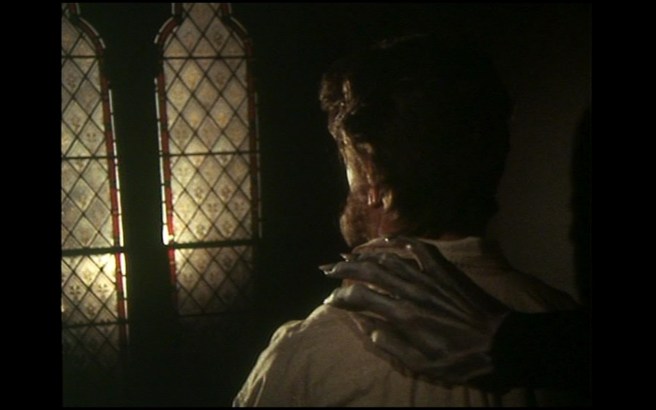
Nevertheless, as is traditional over the festive period I did sit down to re-watch many of the classic MRJ adaptations that make up the bulk of the AGSfC strand thanks to the DVD set released several years ago by the BFI, as well as the repeat of Mark Gatiss’ 2019 adaptation of Martin’s Close on BBC Two on Christmas Eve. I always find it difficult to choose a favourite from the series (leaving the 1968 Whistle… to one side in this instance as it’s technically not part of the series proper), although I increasingly find myself drawn to The Stalls of Barchester as my go-to adaptation, in no small part due to the beautifully dark cinematography made possible by the somewhat unusual decision to shoot both interiors and exteriors on film rather than video (a trait thankfully carried through the original run). Generally the series’ low points are few, although for some reason I also decided to watch the decidedly un-Jamesian original story The Ice House again, which left me feeling as bored and confused as I have been on all previous viewings. A somewhat sad way to officially end the original series, but at least we have 1979’s Schalcken the Painter which may as well have been an episode and provides a more fitting conclusion. I’d love to know my readers’ favourite adaptations, so please leave a comment below with yours.
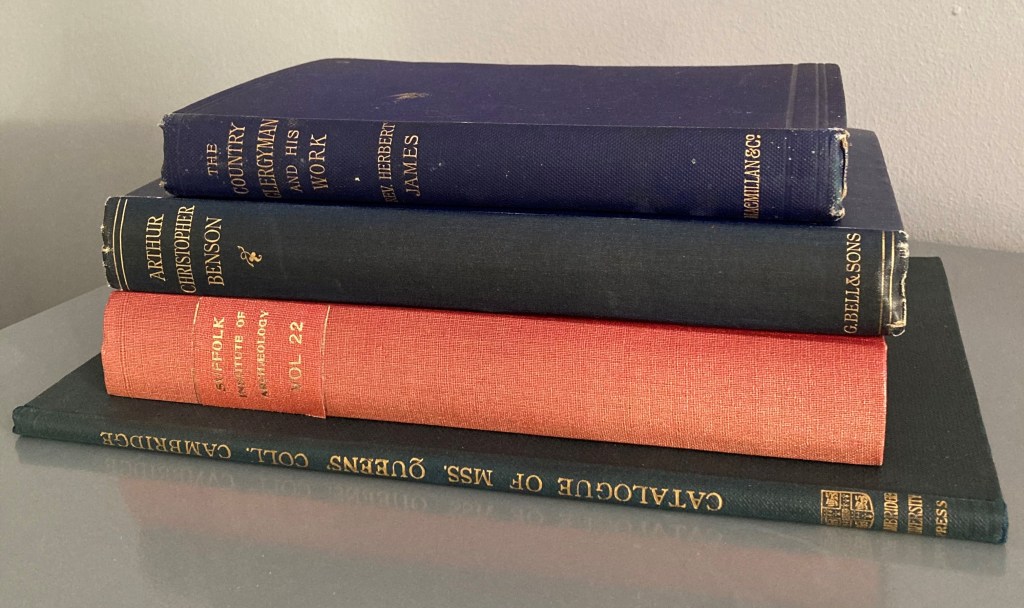
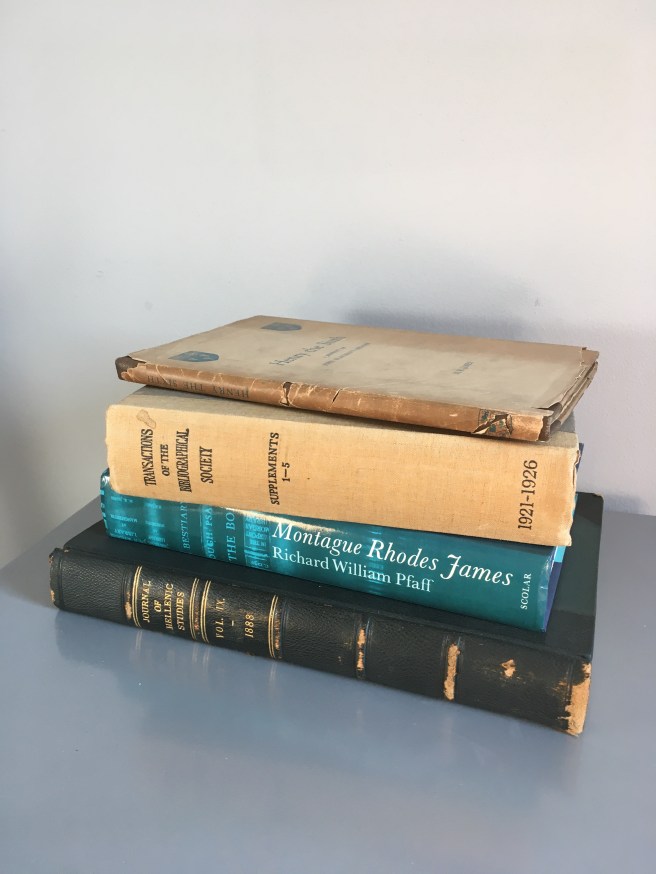
New M. R. James acquisitions, November/December 2020
I have a number of others to add over the coming weeks, including a copy of the Eton College catalogue of Mss. received as a Christmas gift, which contains a number of interesting letters relating to some research carried out in the early 1970s. I’m planning to put together a more detailed piece on this particular acquisition in due course.
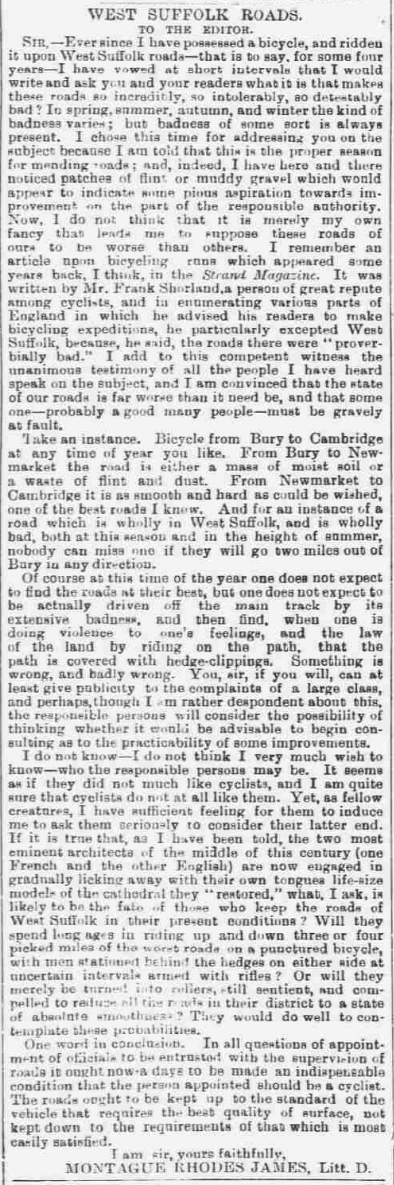
Over the course of his life, M. R. James sent many letters to contemporary newspapers, covering a variety of subjects from archaeological discoveries to obituaries of friends and colleagues. I thought it might be of interest to begin a series wherein I will occasionally transcribe some of these letters. The vast majority of these were published in The Times between 1901 and his death in 1936, but I am beginning with a letter entitled “West Suffolk Roads”, which was printed in the Bury and Norwich Post and Suffolk Standard on 17th January, 1899.
Unlike the majority of James’ letters which were focused primarily around scholarly and college matters, this piece sees James expressing his frustrations around the condition of the roads around Bury St. Edmunds in a five-paragraph diatribe. It certainly makes for an amusing read and a rare opportunity to witness James in a mood of indignation.
Duncan J. Rule.
WEST SUFFOLK ROADS. TO THE EDITOR
Sir,—Ever since I have possessed a bicycle, and ridden it upon West Suffolk roads—that is to say, for some four years—I have vowed at short intervals that I would write and ask you and your readers what it is that makes these roads so incredibly, so intolerably, and so detestably bad? In spring, summer, autumn, and winter the kind of badness varies; but badness of some sort is always present. I chose this time for addressing you on the subject because I am told that this is the proper season for mending roads; and, indeed, I have here and there noticed patches of flint or muddy gravel which would appear to indicate some pious aspiration towards improvement on the part of the responsible authority. Now, I do not think that it is merely my own fancy that leads me to suppose these roads of ours to be worse than others. I remember an article upon bicycling runs which appeared some years back, I think, in the Strand Magazine. It was written by Mr. Frank Shorland[1], a person of great repute among cyclists, and in enumerating various parts of England in which he advised his readers to make bicycling expeditions, he particularly excepted West Suffolk, because, he said, the roads there were “proverbially bad.” I add to this competent witness the unanimous testimony of all the people I have heard speak on the subject, and I am convinced that the state of our roads is far worse than it need be, and that some one—probably a good many people—must be gravely at fault.
“West Suffolk Roads” – Letter written by MRJ to The Bury and Norwich Post and Suffolk Standard, 17th January 1899.
Of course at this time of the year one does not expect to find the roads at their best, but one does not expect to be actually driven off the main track by its extensive badness, and then find, when one is doing violence to one’s feelings, and the law of the land by riding on the path, that the path is covered with hedge-clippings. Something is wrong and badly wrong. You, sir, if you will, can at least give publicity to the complaints of a large class, and perhaps, though I am rather despondent about this, the responsible persons will consider the possibility of thinking whether it would be advisable to begin consulting as to the practicability of some improvements.
I do not know—I do not think I very much wish to know—who the responsible persons may be. It seems as if they did not much like cyclists, and I am quite sure that cyclists do not at all like them. Yet, as fellow creatures, I have sufficient feeling for them to induce me to ask them seriously to consider their latter end. If it is true that, as I have been told, the two most eminent architects of the middle of this century (one French and the other English) are now engaged in gradually licking away with their own tongues life-size models of the cathedral they “restored,” what, I ask, is likely to be the fate of those who keep the roads of West Suffolk in their present conditions? Will they spend long ages in riding up and down three or four picked miles of the worst roads on a punctured bicycle, with men stationed behind the hedges on either side at uncertain intervals armed with rifles? Or will they merely be turned into rollers, still sentient, and compelled to reduce all the roads in their district to a state of absolute smoothness? They would do well to contemplate these probabilities.
One word in conclusion. In all questions of appointment of officials to be entrusted with the supervision of roads it ought now-a days to be made an indispensable condition that the person appointed should be a cyclist. The roads ought to be kept up to the standard of the vehicle that required the best quality of surface, not kept down to the requirements of that which is most easily satisfied.
I am sir, yours faithfully, MONTAGUE RHODES JAMES, Litt. D.
[1] – Frank Shorland was an early champion cyclist and the chairman and general manager of the Clément-Talbot automotive manufacturer in the early part of the 20th century.
There is also one new addition to the Ghost Stories section in the form of the incomplete tale The Fenstanton Witch, taken from the original manuscript held in Cambridge University Library archives. My sincere thanks go to N. J. R. James and Rosemary Pardoe for allowing me to reproduce this transcription on Antiquarian Ghosts.
Finally, I wanted to put in a small plug for a project many of you may already be aware of: Dr. Jane Mainley-Piddock’s book Casting the Runes: The Letters of M. R. James, which is currently seeking funding through crowdfunding publisher Unbound. I’m personally very keen to get my hands on a copy of the book, so please do consider backing the project if you’d be interested in seeing more of James’ personal correspondence published. The funding target stands at 71% at the time of writing.
Shortly after assembling the research materials for my previous post on the Penn-Gray Society, I began thinking more deeply about the number of “lost” photographs of M. R. James that may lay waiting to be discovered in unexplored paper or digital archives. This thought led me to pose the question to myself as to whether there exists any actual film footage of James, and if so, where it may be found. I had personally never seen any film purporting to show James, but it did seem entirely possible that it might exist, given the period he was alive.
If anything were to be found, I suspected that the source would almost certainly be old newsreel footage, and the likely eras of James’ life that may have given cause for such film to be taken would be his provostships at either King’s College or Eton. As far as British newsreels are concerned, the two main companies operating during James’ lifetime were Pathé News and British Movietone News (the latter now held by the Associated Press). Thankfully, the complete archives of each have been digitised and made available online.
The obvious place to begin was to query both archives to ascertain whether James’ name appeared in any associated textual metadata but this was, as expected, a dead end. A subsequent search of newsreel clips relating to King’s College likewise yielded no fruit. However, I held out hope that a perusal of the archives for material relating to Eton could yet produce an identification, particularly given that James’ provostship of the college took place in his later years, during a time in which newsreel film was becoming more commonplace. The results of this search did not disappoint.
In total, I believe I have been able to locate five separate newsreel clips which provide us with moving images of Montague Rhodes James. I am reliably informed that three of these – those held within the archives of British Pathé – are previously-known filmic records of James, while the remaining two appear to be “new” discoveries. The caveat is of course that, owing to a threadbare set of accompanying notes, the sightings have by necessity been based on knowledge of the dates of James’ provostship of Eton, an examination of events likely to have called upon presence of the provost, and most importantly a study of known still photographs of M. R. James in the relevant time periods. In addition, I passed my findings to the curator of the photographic archive at Eton, who while unable to provide further information on the content of any of the newsreels, did concur with each of my identifications. Eton College itself holds no film footage of James within its archives.
Below you will find each of the five clips with accompanying notes. Initially I had hoped to license these directly for hosting on Antiquarian Ghosts, but costs proved prohibitive with a single-site license for a five year period running to around £300 per clip. As such, I have instead included embedded versions linked to the British Pathé and Associated Press YouTube channels, both of which host their full digitised archives. I have also included links to each of the clips’ pages on the official archive sites, as personal licenses are available for a much lower price should you be interested in purchasing a particular newsreel for your own viewing.
For the British Pathé newsreels, I would recommend viewing the YouTube version as these are of higher quality than the website previews, while the British Movietone News clips are somewhat clearer on the official site, particularly in full-screen mode.
Newsreel clip #1: “35 Etonian Generals Visit Old College (1919)”
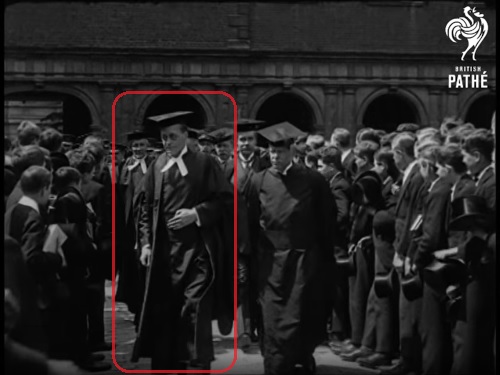
The first of the newsreel clips is the earliest in date, filmed in 1919 during the second year of M. R. James’ provostship at Eton. The clip itself depicts a visit by thirty five British Army generals and former Etonians to the college in the aftermath of the First World War. They can be seen touring the college grounds and giving a speech to an assembled crowd of Eton boys. Sadly there is no audio track present, and so we are unable to hear what was said.
James can be seen leading the procession at the very beginning of the clip, on the left hand side of the frame, as shown here:
Screen capture from “35 Etonian Generals Visit Old College (1919)”, with M. R. James highlighted.
I believe James is also visible at the end of the clip at the top of the staircase to the far left, although unfortunately his face is obscured by a large lamp, making conclusive identification difficult.
Here is the clip itself, from the British Pathé archives:
Newsreel clip #2: “New colours for Eton OTC (1930)”
The second clip in the Pathé archives brings us forward in time to the 1930s, during the later years of M. R. James’ life and the decade in which all of the subsequent newsreels were filmed.
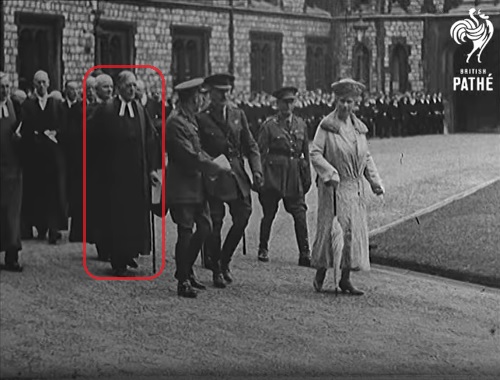
This particular newsreel features a ceremony held at Windsor Castle, during which King George V and Queen Mary present new colours (flags) to the boys of the Eton Officer Training Corps. (OTC). James can be seen walking directly behind the King and Queen in a procession around the grounds of Windsor at around the 0:30 mark, as illustrated in this screen capture:
Screen capture from “New Colours for Eton OTC (1930)”, with M. R. James highlighted.
The identification of James here is evident to anyone familiar with known photographs from the time. Note the robes being worn here – despite the footage being monochrome we can observe a difference in tone between the main robe and the section over the shoulders. Sir Gerald Kelly’s 1936 portrait of James illustrates this in colour, with the top section being red, over black robes. I’m unclear as to whether this particular style of Eton academic dress signifies the wearer as provost, or if it had a more general usage. Also of note is the walking cane being held in James’ left hand; this serves as a good clue to his identity in all of the subsequent clips, each filmed post-1930.
The clip itself, from the British Pathé archives:
There are two other versions of this particular clip held within the Pathé archives (attributed to Reuters), but the above is of the greatest clarity.
Newsreel clip #3: “H.R.H. The Duke of Connaught at Eton (1934)”
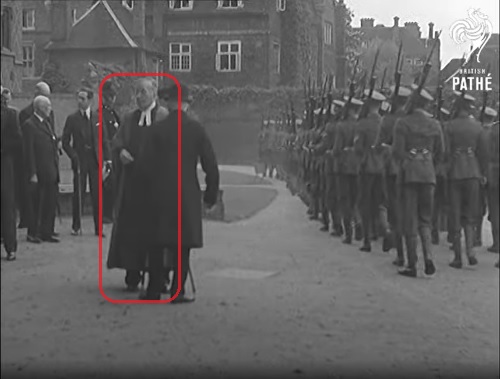
The third clip depicts a visit by Prince Arthur, the Duke of Connaught and Strathearn (third son of Queen Victoria and Prince Albert), to unveil a memorial tablet to fallen Etonians of the Rifle Brigade at the college. Following an inspection of the OTC, we then see the Duke led by M. R. James through the grounds and a crowd of assembled boys.
Screen capture from “H.R.H. The Duke of Connaught at Eton (1934)”, with M. R. James highlighted.
This clip contains the greatest amount of footage of James in any of the five, and again the identification here is fairly self-evident. He first appears at 0:17 where he can be seen speaking to the Duke before gesticulating towards the route to be walked. The following shot at 0:25 clearly shows James again conversing with the Duke, and at 0:42 (and in a closer frame at 0:56) we can see both men walking through the crowd of assembled cheering Eton schoolboys.
Screen capture from “H.R.H. The Duke of Connaught at Eton (1934)”, with M. R. James highlighted.
Screen capture from “H.R.H. The Duke of Connaught at Eton (1934)”, with M. R. James highlighted.
Here is the full newsreel from the British Pathé archives:
Newsreel clip #4: “Another Wall Game Ends Without Score (1932)”
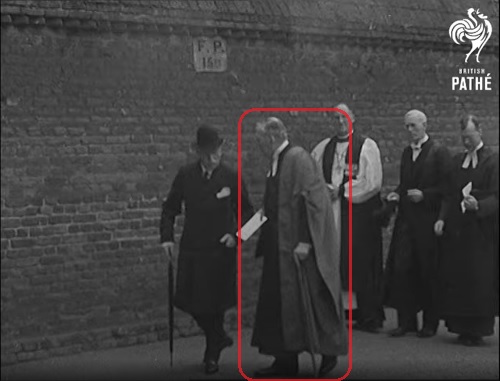
Now we move on to the first of two clips from the archives of British Movietone News, which I believe will be new to those interested in M. R. James. There are many old newsreels depicting the famous St. Andrew’s Day wall game at Eton, but this appears to be the only one made during James’ provostship in which we can identify him with certainty.
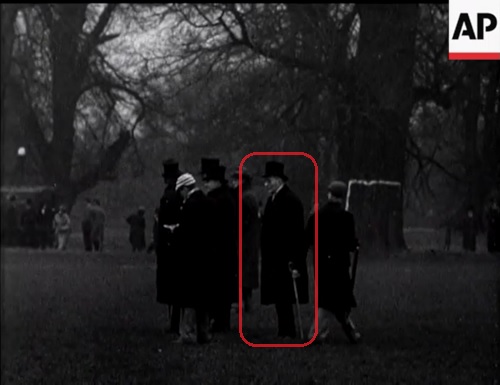
Luckily, in the case of this clip the original audio track has survived, and helpfully contains a voiceover identifying one of the gentlemen appearing around the 1:48 mark as the college’s provost. I am certain that James’ is the figure stood slightly behind the rest of the group – again he can be seen holding a cane in his left hand, and indeed his trademark spectacles are visible when he turns toward the boy walking past him at 1:56:
Screen capture from “Another Wall Game Ends Without Score (1932)”, with M. R. James highlighted.
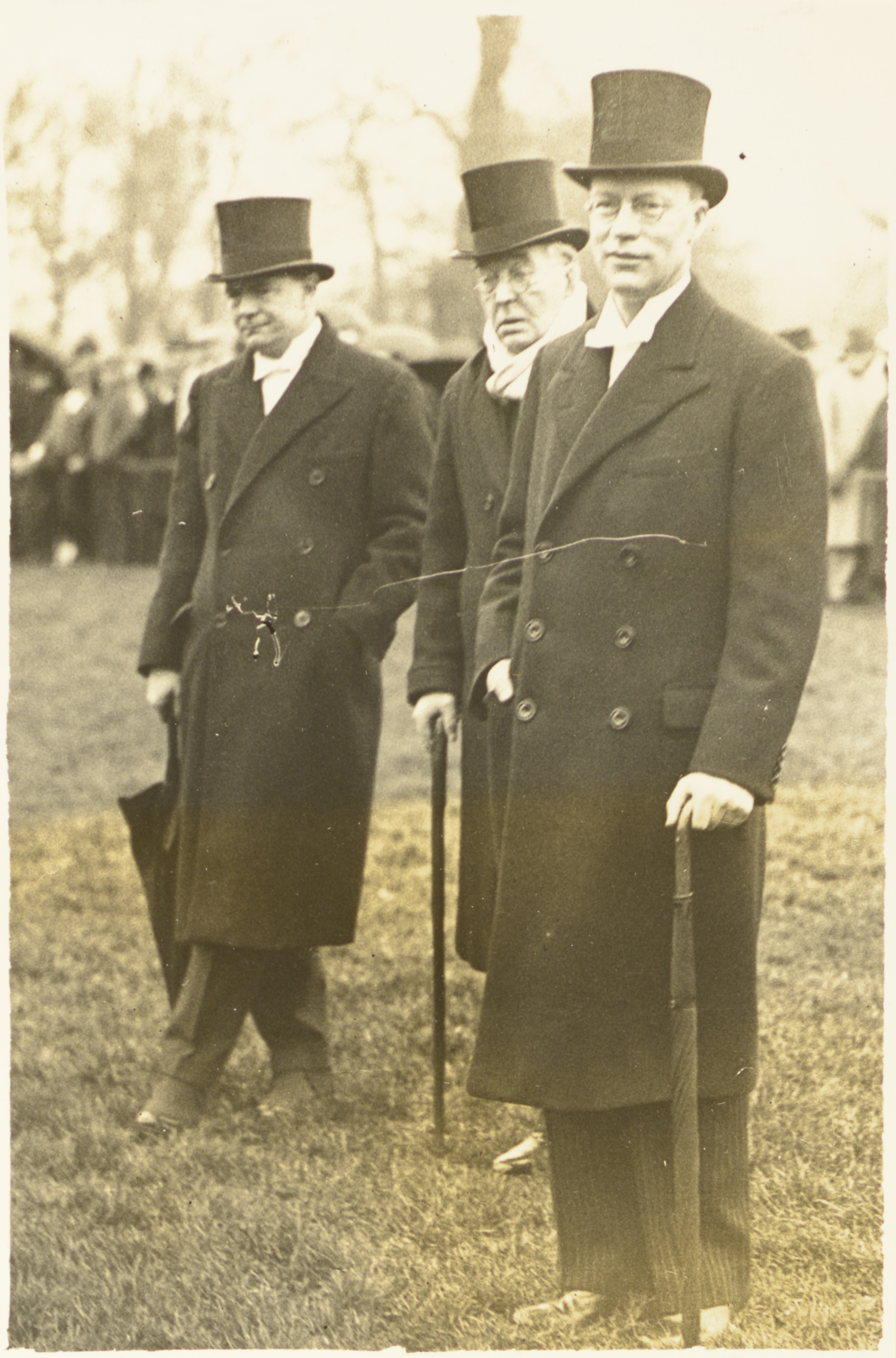
In addition, the curator of the Eton College photographic archives kindly provided me with an image taken at the St. Andrew’s Day wall game two years later in 1934, which shows James dressed in an almost identical fashion:
Photograph of M. R. James (centre) taken on St. Andrew’s Day, 1934, watching the wall game in progress. On the left is John Comyn Vaughan Wilkes, Master in College 1930-1937, and subsequently Warden of Radley College, Oxfordshire; and on the right Sir Claude Aurelius Elliot, Head Master of Eton 1933-1949, and provost 1949-1965. Photograph by L. F. Menzies-Jones, Drawing Master, and taken from his private album. Reproduced with kind permission of The Provost and Fellows of Eton College.
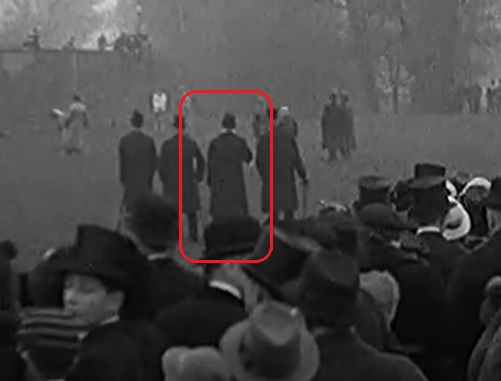
Indeed, the above image gave me cause to re-examine a newsreel of the 1934 game held in the British Pathé archives, and while too far from the camera to provide any certain identification, it seems James may be visible in the distance stood with three other men in similar attire, in front of the crowd and inside the playing area. The circled figure appears to be the only one wearing a scarf, and as such leads me to suspect that this may be M. R. James.
Possible sighting of MRJ in “Eton Wall Game (1934)”
Regardless, the earlier 1932 newsreel is much clearer, and can be viewed below:
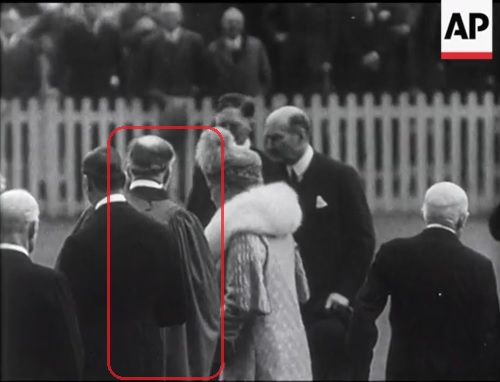
Newsreel clip #5: “Queen and Princesses Kept Busy (1935)”
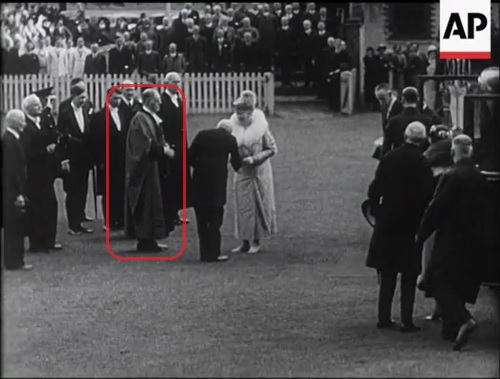
The final clip is also the last chronologically – filmed the year prior to James’ death – and features a young Elizabeth II (at the time Princess Elizabeth) alongside her mother, the Duchess of York, and grandmother, Queen Mary. The newsreel itself covers a number of activities of the royal party including a visit to Eton, during which James can be seen among the assembled dignitaries greeting the Queen:
Screen capture from “Queen and Princesses Kept Busy (1935)”, with M. R. James highlighted.
The following shot provides us with a much closer view of James, although sadly only from behind:
Screen capture from “Queen and Princesses Kept Busy (1935)”, with M. R. James highlighted.
The academic dress in this clip again corresponds with that seen in previous newsreels, and the cane, while not particularly visible, can be seen briefly in MRJ’s left and as he greets the Queen. Again, when studied alongside photographs from the time, this is quite clearly M. R. James.
The British Pathé archives contain several other newsreels which while holding promising titles, do not include any images of M. R. James: “The King at Eton (1934)” contains the original audio track and mentions the King and Queen being received by the vice provost “in the absence of the provost, who was indisposed”; and “The Retirement of Eton’s Head Master (1933)” which contains recorded audio of the speech given by the Head Master, Dr. Cyril Alington. Sadly James is not present in the clip, and any hope of hearing his recorded voice (assuming he also spoke at the event) went unrealised.
One final newsreel clip in the Pathé archives which may be of interest is “Eton’s New Provost (1936)”, which features James’ successor, Lord Hugh Cecil, being installed as provost. James is named briefly in the accompanying audio, but unfortunately there does not seem to be a counterpart newsreel of his own ceremony eighteen years earlier.
As discussed at the beginning of this article, the sparsely-documented nature of many of these old newsreel clips means that it becomes necessary to rely mainly on educated guesswork and simple visual identification when attempting to confirm those persons depicted, unless named directly in the title cards. Nevertheless, I believe my conclusions to be correct. My sincere thanks to Mr. Roddy Fisher, curator of the Eton photographic archive, for his help and support of my identifications, which have allowed me to publish this article with confidence in the veracity of the claims made.
I would be very interested to hear from any readers with additional information or thoughts on the newsreels, and indeed if you are aware of any film footage of M. R. James not covered here, please get in touch.







 Antiquarian Ghosts